Not sure how to layer lighting in a room that feels flat? Combine ambient, task and accent light at different heights and brightness levels, so no single fixture does all the work. Dimmers help you shift the mood.
This guide sits within our interior design basics series and focuses on one skill: building a lighting scheme from several sources.
| Item | Value |
|---|---|
| Basic layers in Kichler’s guide | 3 layers (ambient, task, accent) |
| Types in Livingetc’s guide | 4 types (ambient, task, accent, decorative) |
| Ways to layer, per lighting designer Sam Coles | 2 ways (ceiling-to-floor height, then brightness) |
| Levels in Livingetc’s open-plan kitchen example | 3 levels (upper, mid, lower) |
| Livingetc guide publication date | 4 November 2025 |
These figures come from Livingetc and Kichler. Guides get updated, so check the sources before you rely on them.
What layered lighting actually means
Layered lighting is combining different types of light to give a room depth and flexibility. Luke Thomas, design director at John Cullen Lighting UK, describes it this way in Livingetc’s 4 November 2025 guide.
Kichler’s basic model uses 3 layers: ambient, task and accent, as set out in its light layering guide. Livingetc’s experts count 4 types by adding decorative light to that list, according to the same Livingetc piece.
The payoff is adaptability. Lighting designer Eileen Pierce says that when the types work together, the same room can move from cooking to conversation to a calm evening without strain, as quoted by Livingetc.
Start with the ambient base
Ambient light is the foundation, the canvas for everything else. Kichler points to ceiling fixtures, track lighting, and evenly spaced downlights or recessed lights as ways to create it.
Treat it as one layer, not the whole scheme. Sam Coles warns that if the ceiling light, wall lights and table lamp all share the same intensity, the layering will not do its job, as reported by Livingetc.
Recessed downlights and any new hardwired fixture involve electrical work. Hire a licensed electrician for that part.
Add task light where you work
Task lighting covers the jobs of the day. Kichler says it belongs where routine tasks happen, and that it often sits under or over cabinets and around mirrors.
Typical spots include:
- Kitchen worktops, where cooking and prep happen.
- Bathroom or dressing mirrors, for makeup and grooming.
- Desks and homework tables.
- Reading chairs beside a lamp.
Kichler also suggests placing downlights above countertops, slightly away from the cabinets, to cover high-task areas, per its guide. Reading chairs are a sensible extra, though that one is a general suggestion rather than a sourced rule.
Finish with accent and decorative light
Accent lighting is the fun layer, because it is about casting a glow on your favorite things. Kichler lists a pendant over a bar, counter or kitchen island, a wall sconce, and a light inside a bookshelf as examples.
Livingetc adds that layered lighting helps illuminate key surfaces, reveal materiality and highlight architectural accents or focal points, according to its guide. Light also shapes mood, defines texture and brings colors to life, so it is worth reading about how to mix patterns in a room: how to mix patterns in a room covers the fabric and surface side.
Low light can do two jobs at once. Kichler notes that toe kick lighting doubles as a nightlight for midnight snack runs, per its layering page.
How do you set height and brightness?
Sam Coles suggests looking at layering in 2 ways: first a physical layering from the ceiling down to the floor, then the brightness level, per Livingetc. Both matter, because height spreads light around the room while brightness gives the layers their ranking.
Livingetc’s open-plan kitchen example splits the lighting into 3 levels:
- Upper: the ceiling-level lighting.
- Mid: decorative pendants above the dining table and an LED strip concealed within the joinery, creating a soft glow.
- Low: an LED strip that adds a glow under the kitchen island.
The example comes from John Cullen Lighting’s design, as described by Livingetc. The same thinking works in a living room, where floor lamps, table lamps and wall lights fill the middle and lower levels.
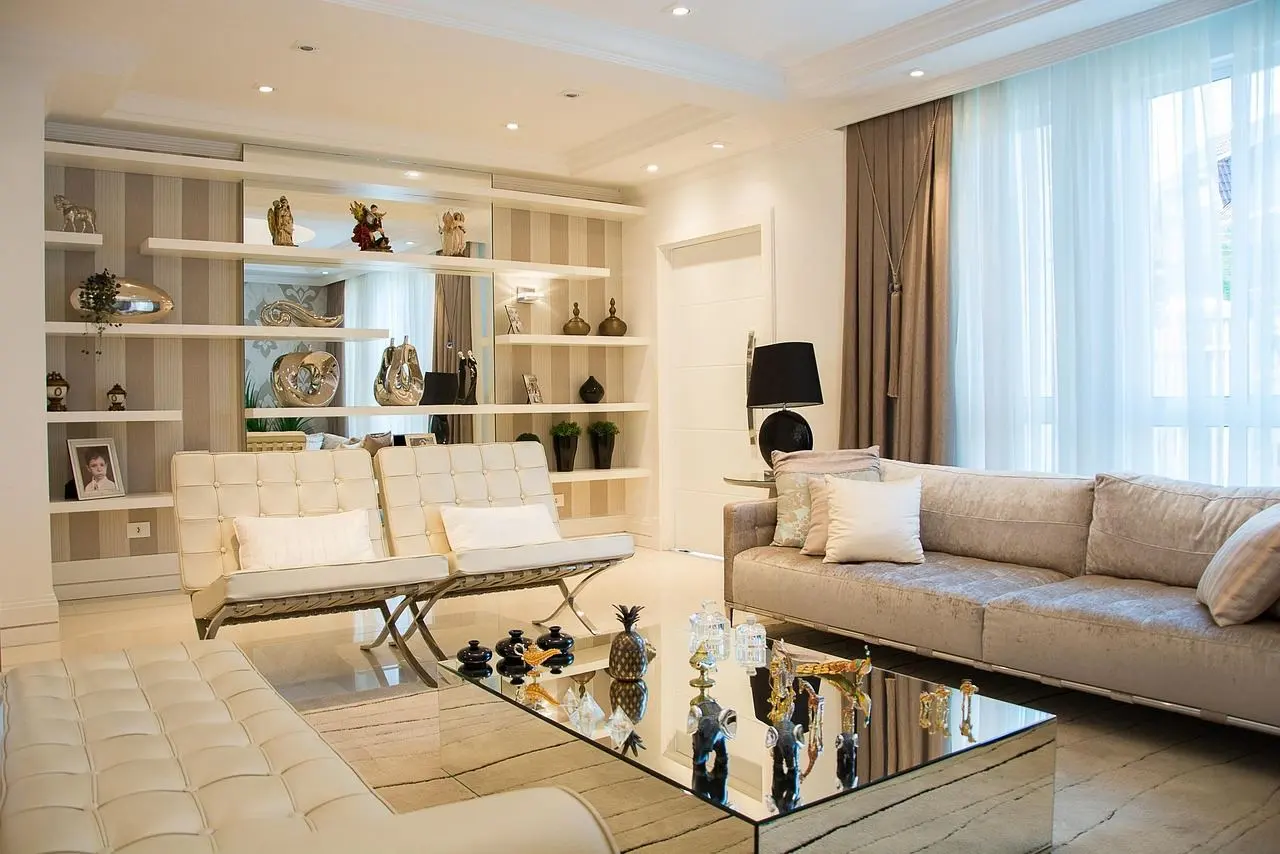
Lamp positions follow seating, so settle how to arrange furniture in a living room before you decide where each floor and table lamp goes.
Use dimmers and sensors to change the scene
Dimmers turn a fixed scheme into a flexible one. Kichler recommends installing downlights and using a dimmer to adjust the ambient light and highlight your accents.
The same guide offers a few everyday uses:
- A dimmable ceiling light can act as a bedtime cue at storytime.
- A sensor switch that turns on when doors open helps when your arms are full of laundry.
- A dimmer paired with a motion sensor brings light up slowly as you enter the room.
Kichler adds that the layering rules apply outdoors too, for example task light over a grilling area and wall lights at an entrance, per its guide.
Frequently asked questions
What is the difference between task and accent lighting?
Show answer
Task light helps you see to do something, such as chop vegetables or apply makeup. Accent light is there for display and atmosphere, drawing the eye to a bookshelf, a wall or a favorite object.
Why should the lights not all be equally bright?
Show answer
Equal brightness flattens the room, because nothing leads and nothing recedes. Giving each layer its own level is what creates the sense of depth that designers talk about.
Can I layer lighting outside as well?
Show answer
Yes. Kichler says the same approach carries over to patios and entrances, with practical light where you prepare food and softer wall lights to welcome you in.
Who should install new fixtures?
Show answer
Plug-in lamps need no wiring, which makes them an easy place to begin. Anything hardwired, such as recessed lights or new wall lights, is a job for a licensed electrician.