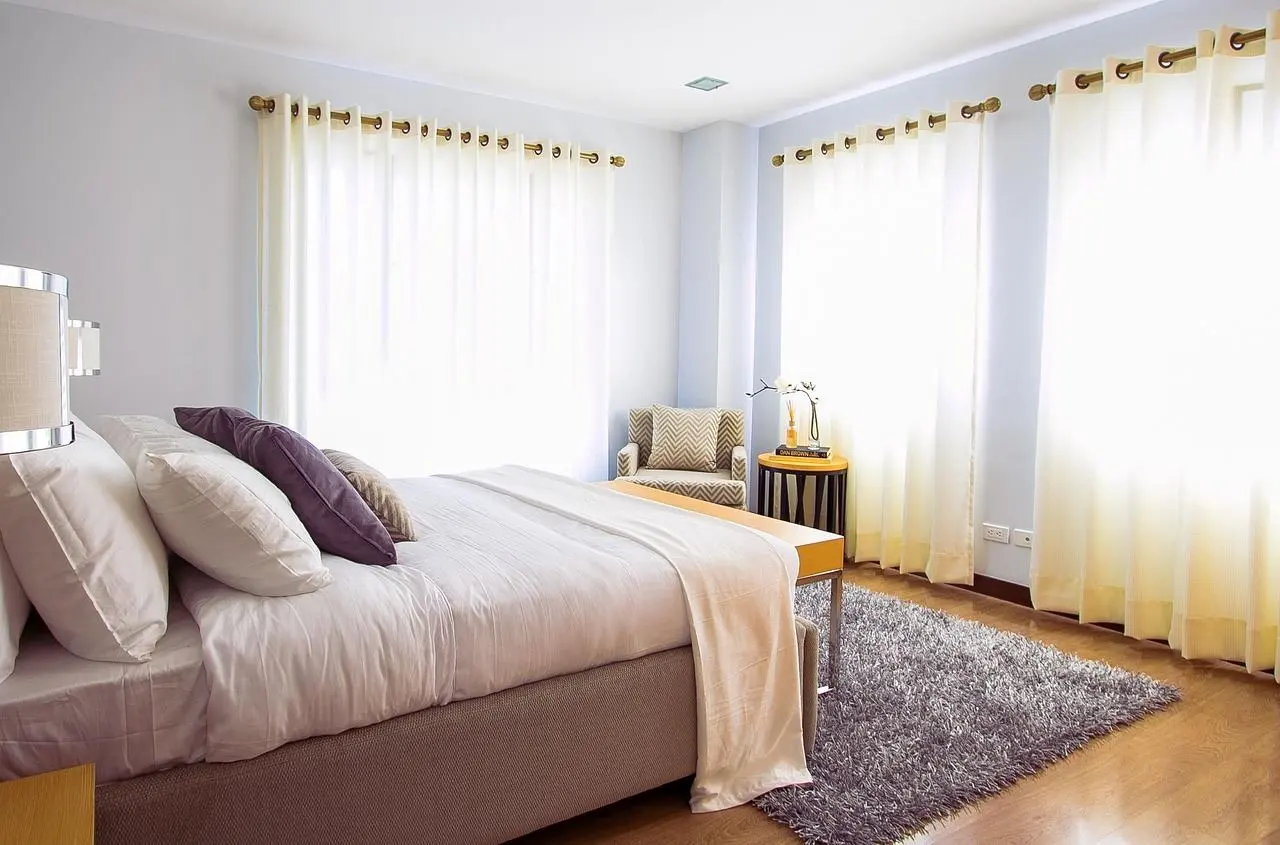
Worried your curtains look too short or skimpy? Here is how to hang curtains correctly: set the rod a few inches above the window, extend it past the frame, and buy fabric about twice the window’s width.
The wider guide to interior design basics covers how window treatments fit into a whole room.
| Measurement | Guideline |
|---|---|
| Typical rod height above the window | About 4 inches above the window |
| Highest sensible rod position | No more than 8 inches above the window |
| Rod extension each side, partial cover | 2 to 5 inches each side of the frame |
| Rod extension each side, maximum light | 8 to 15 inches each side of the frame |
| Fabric fullness | 2 to 2.5 times the window width |
| Hem clearance for curtains you open often | Within one-half inch of the floor |
These figures come from This Old House and Bob Vila. Guidance like this can change, so check the sources before you rely on the numbers.
Rod height: how far above the window
Start with the rod height, because it sets every other measurement. This Old House says a rod usually sits about 4 inches above the window, and many people raise it further to make the room feel taller (This Old House).
Bob Vila’s guide describes the same shift: decorators have moved on from rods right above the window to rods a little or sometimes a lot higher (Bob Vila). Its variations depend on how much wall sits above the window:
- If the top of the window is 6 to 12 inches from the ceiling, place the rod halfway between the window top and the ceiling (Bob Vila).
- If the gap is more than 12 inches, or the ceilings are high or vaulted, the rod can go higher, but not more than 8 inches above the window (Bob Vila).
- If the windows reach right up to the ceiling, hang the rod at the ceiling line (Bob Vila).
A higher rod usually means a longer panel. Floor-length panels come in standard heights of 84 inches, 95 inches, 108 inches and 120 inches, and going higher may mean hemming a longer panel or paying for custom curtains (This Old House).
Rod width and curtain fullness
The rod should extend past the frame so the open fabric can stack beside the glass instead of covering it. This Old House offers two approaches, and Bob Vila gives a third range (This Old House, Bob Vila):
- Partial cover: add 2 to 5 inches to each side of the frame so the drapes still overlap the window when open.
- Maximum light: add 8 to 15 inches to each side so the glass stays clear when the drapes are open.
- Bob Vila’s range: a rod 3 to 6 inches wider than the window on each side.
Fabric width matters as much as rod width. Bob Vila’s rule of thumb is that curtains look attractively full with 2 to 2.5 times the width of the window itself (Bob Vila).
Take a window that is 36 inches wide. It would need panels measuring between 72 and 90 inches in total, according to the same guide (Bob Vila).
How long should curtains hang?
How you use the curtains decides the hem length. If you will open and close them regularly, Bob Vila suggests a hem within one-half inch of the floor, which gives a long clean line without getting in the way (Bob Vila).
Purely decorative panels can go longer. About 3 extra inches of fabric makes a stylish puddle, and 4 to 6 extra inches makes a more dramatic one, but puddled fabric collects dust and pet hair and can tempt a toddler or pet to tug it (Bob Vila).
Furniture changes the answer. If a radiator, couch or deep sill sits under the window, the curtains should stop just above that obstruction rather than reaching the floor (Bob Vila).
To work out the length to buy, Bob Vila’s method adds up four measurements (Bob Vila):
- Measure the height of the window from top to bottom.
- Decide how far above the window the rod will sit.
- Measure from the bottom of the window to the floor.
- If you want a puddle, decide how deep it will be.
The sum of those numbers is the curtain length to buy. Once the window is dressed, the floor is the next layer, and what size rug do I need covers how to size it.
Installing the rod so it stays level
Aim to screw the brackets into a wall stud where you can. This Old House advises using a stud finder to locate the stud beside the window, then shifting the bracket position slightly if a stud sits close to where you want it (This Old House).
Long or delicate rods need extra support. A center bracket helps prevent sagging on rods longer than 4 feet (This Old House).
Matching both sides by eye is hard in an open space. A quick cardboard template cut to fit over the top corner of the frame lets you mark the same hole positions on each side (This Old House).
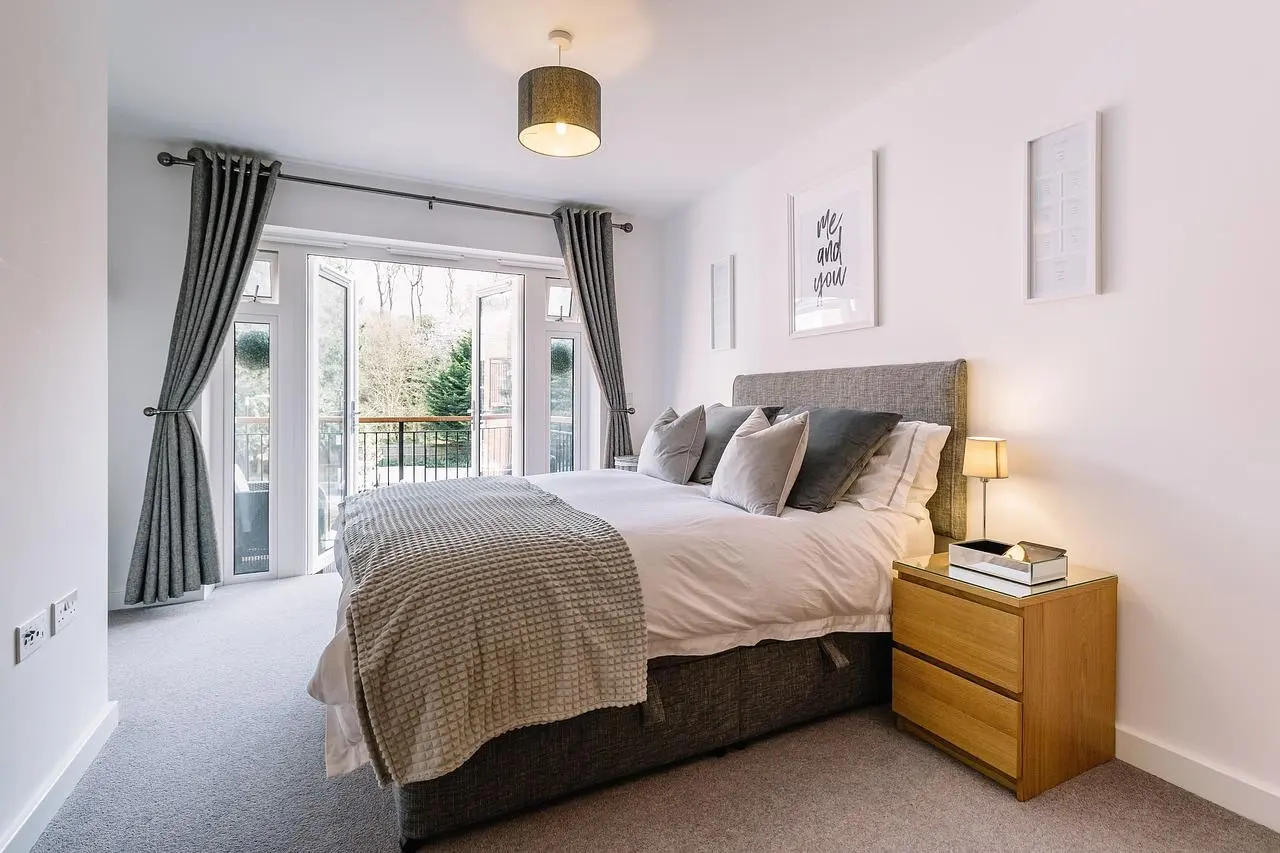
The installation order from This Old House is straightforward (This Old House):
- Mark the bracket positions with the template and drive the screws on one side.
- Repeat on the opposite side.
- Thread the curtains onto the rod according to their hanging style.
- Set the rod on the brackets and spread the fabric evenly.
- Add finials if you like, then tighten the set screws on the brackets.
The hanging style matters too: common options are metal grommets, fabric top tabs, clip-on rings and pocket sleeves (This Old House). Walls beside the window can then carry art, and how to hang a gallery wall explains how to plan that.
Frequently asked questions
Are curtains and drapes the same thing?
Show answer
Not strictly. Bob Vila says curtains offer some privacy while still letting light in and suit bathrooms and kitchens, while draperies provide full privacy, which matters most in a bedroom (Bob Vila).
Should I buy the curtains before the rod?
Show answer
Yes, if you can. The way a curtain hangs changes its overall height, so This Old House suggests having the curtains on hand when you settle the final rod position (This Old House).
How many panels do I need for one window?
Show answer
Most curtains and drapes are sold as a pair that opens from the middle. When you check fullness, count the combined width of both panels rather than a single one (Bob Vila).
What if there is no stud where the bracket needs to go?
Show answer
Fit wall anchors before you mount the brackets. This Old House gives that as the fallback when the marked position misses a stud (This Old House).