Feeling boxed in by your room? Here’s how to make a small room look bigger: paint one cohesive color, lift furniture off the floor, hang curtains high and keep light moving. Start with whichever is cheapest.
This guide sits within the wider topic of small space living, where each room and storage problem gets its own practical walkthrough.
| Design move | Starting point |
|---|---|
| Walking room behind a sofa, side table or armchairs | About 18 to 24 inches |
| Curtain rod height above the window frame | 6 to 12 inches |
| Curtain rod extension past the frame, each side | About 5 to 10 inches |
| Curtain length | Just long enough to “kiss the floor” |
| Wall color approach | One color or color palette for all walls |
These figures come from NPR’s Life Kit guide to small-space design tricks. They are designers’ starting points, not fixed rules, and they can change, so check the source before you rely on them.
Start with one calm color scheme
The most repeated advice from designers is to keep the color palette tight. Homes & Gardens says every tone in a small room should adhere to one palette for a cohesive flow, and that too many contrasting colors make a small living room feel overcrowded.
How you apply paint matters as much as which shade you pick. Interior designer Liz Potarazu told the same publication that she paints walls, ceiling and trim the same color to make the room appear larger, and the guide warns that too many visual divides create the illusion of even less space.
The accent wall is out for small rooms, according to the designers NPR spoke to. Designer Shamika Lynch says one statement wall can visually fragment a home, and suggests a single color or palette across every wall. Color drenching goes a step further by running the color from the baseboards all the way to the ceiling.
A few ways to keep color calm without making the room dull:
- Choose one color or a tight palette for walls, trim and ceiling, as the Homes & Gardens guide suggests.
- Save contrast for small items: in one blue-and-white room the yellow arrives through throw pillows, artwork and upholstery, per the same guide.
- Skip loud patterns, paint and wallpaper, which Real Homes links to visual clutter.
- Add interest through texture, which Homes & Gardens says can make a room feel inviting without shrinking it.
Free up floor space and lift things off the ground
Designer Shamika Lynch told NPR that every item in a small home needs to serve a purpose. Clearing the floor is the quickest way to apply that rule, and the same article offers three routes:
- Buy double-duty pieces. Instead of crowding an entryway with a table, bench and coat rack, look for one piece that combines them.
- Hang what you can. Swap a bulky floor lamp for plug-in or battery-operated wall sconces, and mount a standing mirror to the wall or use an over-the-door mirror.
- Go tall. Floor-to-ceiling bookcases or cabinets draw the eyes upward while keeping storage to a small footprint.
Lighting deserves a second look. A retail lighting buyer quoted by Real Homes says mounted wall lights can illuminate the corners of a room without taking up precious space. Plug-in sconces need no wiring, but hardwired fittings are a job for a licensed electrician.
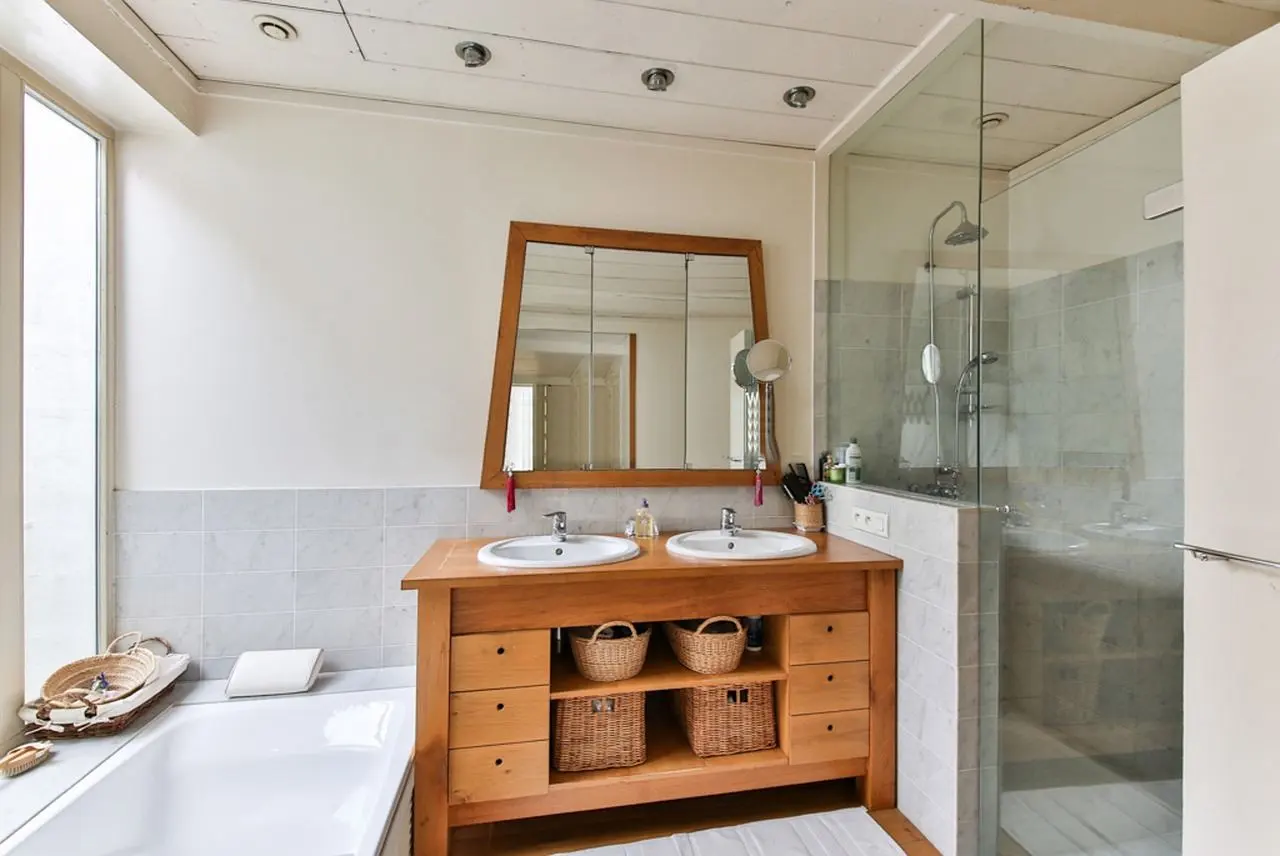
The same wall-first thinking applies in tight bathrooms, and these small bathroom storage ideas show how to put it to work.
Size and place furniture so the room can breathe
Scale is the usual culprit when a room feels cramped. One designer quoted by Homes & Gardens points out that a 9 foot long sofa does not belong in a 12 foot long room.
Going tiny is not the cure either. Another designer in that article argues that a curated selection of appropriately scaled larger pieces makes a more tailored space, and NPR’s Lynch calls the clutter of too many small things the dollhouse effect.
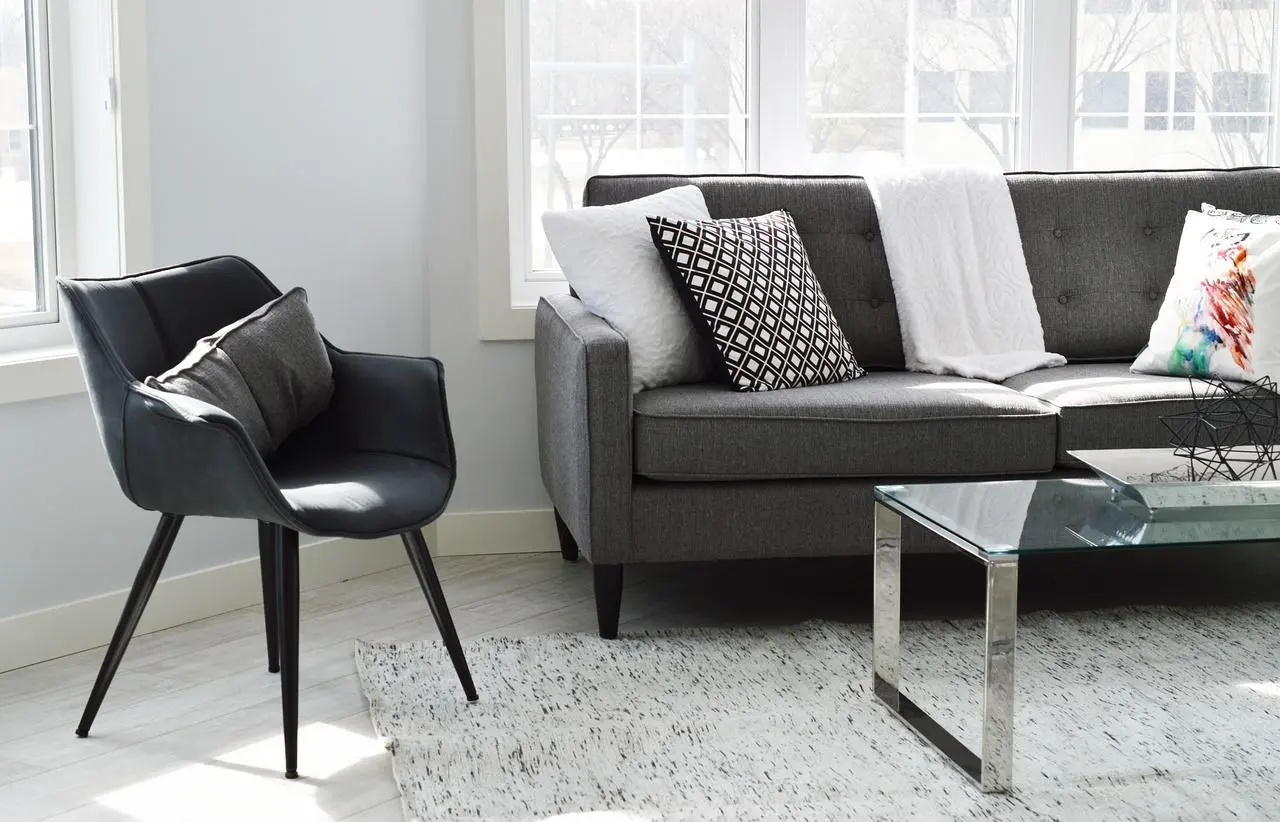
Placement is the next lever. Home design consultant Alexandra Gater recommends leaving about 18 to 24 inches of walking room behind a couch, side table or armchairs to create the illusion of depth. If you float furniture this way, she says to anchor it with a rug, shelves or a console table so the group reads as one zone.
Sight lines count too. Home stager Michelle Minch says a sofa set across the room cuts it visually in half, so she keeps the full length of the room visible where possible. She also favors furniture with cleaner lines over rolled arms, which frees up more functional seating, according to Homes & Gardens.
In open-plan spaces, continuous flooring tricks the eye into seeing one large, unified space, says designer Artem Kropovinsky in the same article. If you are rearranging a lounge, these small living room layout ideas go deeper on where each piece can sit.
Use curtains, mirrors and height to stretch the room
Curtains are one of the cheapest ways to add height. Gater tells NPR to hang them higher and wider than the window frame, which draws the eye upward and out. As a starting point she suggests a rod 6 to 12 inches above the frame, extending about 5 to 10 inches wider on each side.
Length matters as well. Aim for curtains that just “kiss the floor”: too short and they look like the wrong size, too long and they pool and collect dust.
If you mainly want a room to feel more spacious, a retail buyer quoted by Real Homes notes that curtains and drapes can make windows feel overcrowded and block light. Roller blinds are the sleeker alternative, since they let you open up the whole window during the day.
Mirrors help with light. NPR’s writer describes a tall mirrored wardrobe that stored her belongings and reflected much-needed light from the window, and Gater suggests mounting a standing mirror on the wall to save floor space.
Vertical lines work too. The same Real Homes feature suggests wood paneling or striped wallpaper to guide the eye toward the ceiling and elongate the space.
What order should you tackle the changes in?
Begin with decluttering, because it costs nothing. Woman & Home reports that most designers start there, since a thorough clear-out frees up surfaces and floors and creates the illusion of more space.
Interior designer Kelly Collins puts it bluntly in that feature: the more you remove, the more dramatic the result. Once the room is clear, work through the rest in order of effort:
- Clear surfaces and floors of anything you do not use.
- Repaint walls, trim and ceiling in one color, if the lease or budget allows.
- Swap floor lamps for wall lights, and mount or hang mirrors.
- Rehang curtains higher and wider, or switch to roller blinds.
- Reposition or replace furniture that is out of scale with the room.
Take photos before and after each step. Seeing the room on a screen makes it easier to spot which change actually opened it up.
Frequently asked questions
Should a small room have small furniture?
Show answer
Not automatically. NPR’s designers warn that miniature pieces can add up to visual clutter, and recommend furniture that suits the proportions of the room instead.
How far should furniture sit from the wall?
Show answer
A gap of about 18 to 24 inches is the range NPR quotes for floating a couch or chairs. A rug, shelving or console table then ties the grouping together.
Are curtains or blinds better in a small room?
Show answer
It depends on what you want. Curtains hung high and wide add the feeling of height, while roller blinds keep the window clear and let in more daylight.
Can I use a dark color in a small room?
Show answer
Yes. In the NPR guide, Lynch says the shade matters less than using it consistently, because a unified scheme removes the breaks that make walls look shorter.
What can renters or tight budgets do?
Show answer
NPR frames its strategies as suitable for renters and small budgets. Decluttering costs nothing, and plug-in or battery-operated sconces avoid any wiring work.