Your shelves feel either crammed or bare, and you can’t tell why. Here’s how to style a bookshelf: edit to what you love, group objects, and leave real empty space.
For the wider principles behind this, start with our guide to interior design basics.
| Item | Value |
|---|---|
| Books lined up in the middle of a shelf | 10 to 12 books |
| Shelf edit rhythm | Every few months |
| Where heavier items sit | Closer to the ground |
| Lighting option for shelves | Battery-powered lights on a remote |
These figures come from designer advice in Livingetc’s February 2024 bookcase guide and its September 2023 deep-shelves guide. Advice can change, so check the source before you rely on the figures.
Edit before you arrange
Good shelf styling starts with editing, not arranging. Designer Aimee Wertepny advises choosing accessories you want to look at every day, so your bookcase doesn’t turn into a graveyard for unwanted decor (Livingetc).
Clutter is also personal. Stylist Frances Bailey points out that what looks cluttered to a minimalist won’t to a maximalist, so remove something once the shelf feels busy to you. She sends books on to friends and does a shelf edit every few months, as Livingetc reports.
A quick edit pass works like this:
- Take everything off the shelf and wipe it down.
- Sort items into keep, move to another room, and pass on.
- Put back only the books and objects you would happily look at daily.
How much empty space should a bookshelf have?
Leave some breathing room. Interior designer Audrey Scheck says some empty space is crucial and that the end result should feel collected and calm, according to Livingetc.
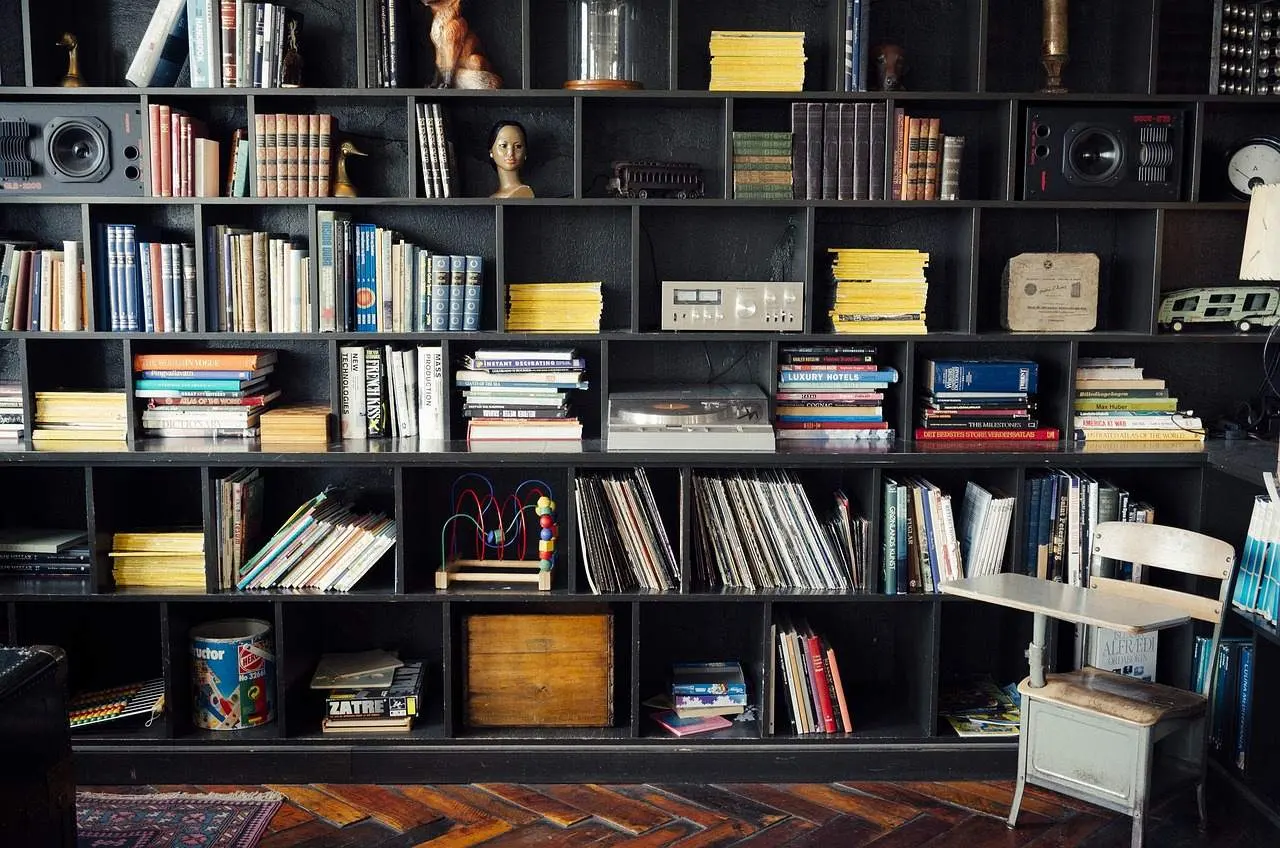
For a concrete starting point, Bailey suggests lining up 10 to 12 books in the middle of a shelf, with space left at either end (Livingetc). Treat it as a rule of thumb and adjust it to the width of your shelf.
The deep-shelves guide backs this up: you do not need to fill every inch, and negative space can be a feature of a minimalist room (Livingetc).

Mix books, objects and art
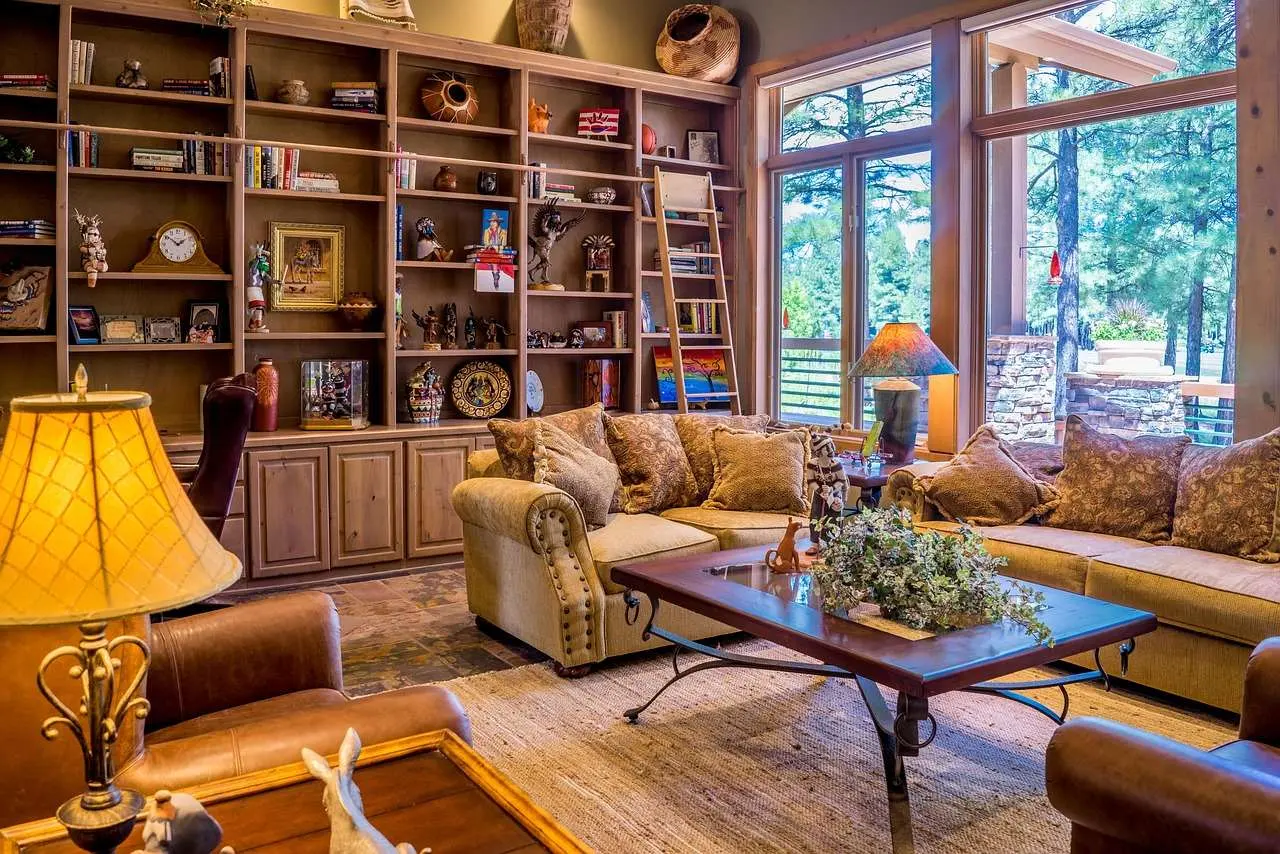
A bookcase doesn’t have to hold only books. Bailey suggests shopping your own house for a small piece of art to rest on a stack of books or hang on the bookcase itself (Livingetc). On a metal bookcase, she says a command strip can hold it in place.
Designer Christina Kim recommends giving an object with a strong form a whole shelf to itself. She warns that small items scattered throughout read as clutter, as the deep-shelves guide explains.
Chairish’s January 2022 guide notes that shelves can now hold everything from vases to baskets to plates. Good candidates for mixing in include:
- Stacks of books laid flat, topped with a small object.
- A framed piece leaning against the back of the shelf.
- A vase, bowl or basket in a material that differs from the books around it.
If your art outgrows the shelf, our guide on how to hang a gallery wall covers the wall side of the job.
Balance weight, height and light
Balance doesn’t mean symmetry. Livingetc’s February 2024 guide says perfectly symmetrical shelves aren’t necessary, and what matters is a sense of consistency across the bookcase as a whole (source).
One way to get there is to anchor the bottom. Kim keeps heavier items such as lanterns, stools or baskets closer to the ground, then layers smaller things like stacked books and leaning art as the shelves rise (Livingetc, September 2023).
Scheck also likes grouping items into vignettes that keep the eye moving around the shelf (Livingetc).
On a low bookcase, Chairish advises resisting the urge to pack it with books. It suggests sculpture, vases and small stacks of paperbacks instead, and notes that decor in the same color as your wall creates visual space (Chairish).
Light finishes the job. You can add battery-powered lights on a remote without any construction, though hard-wired lighting should go to a licensed electrician (Livingetc).
If the shelves sit near a window, it also helps to read how to hang curtains correctly so the two don’t compete for the same wall.
Adapt the look to your style and the season
Minimalist shelves need care. Livingetc’s August 2024 minimalist guide suggests choosing wooden shelving to bring warmth to a pared-back space.
Styling can also shift with the year. Bailey shows natural items such as a conch shell in summer, then moves to art and objects in fall and winter (Livingetc).
Before you call a shelf finished, step back and view it from across the room. Bailey notes that what looks good up close can look different from a wider context.
A simple order to style one shelf
If you freeze at the first shelf, work in this order and repeat it down the case:
- Clear the shelf and keep only what you love.
- Place the heaviest pieces low and the tallest at one side.
- Add a short row of books, leaving a gap at each end.
- Layer one object or small piece of art onto a stack.
- Walk to the far side of the room and remove one item if it feels busy.
Frequently asked questions
How many books should go on a shelf?
Show answer
Think of a short central row as your starting point, with clear space on both sides. Add objects around it until the shelf feels calm rather than full, as Livingetc’s bookcase guide describes.
Can I style a bookcase without many books?
Show answer
Yes. Chairish’s guide suggests backing the shelves with wallpaper to draw attention away from sparse contents, or using sculpture and vases on a lower unit.
How often should I restyle my shelves?
Show answer
A light refresh a few times a year is plenty. Swap in seasonal objects and pass on books you no longer reach for.
Do shelves need lighting?
Show answer
It helps, because dark shelves look flat. Small remote-controlled battery lights are an easy option noted in the deep-shelves guide, while wiring is a job for a licensed electrician.