
Feeling buried under stuff? Here is how to declutter your home: work one room at a time, sort everything into keep, donate or dispose piles, and finish each space before starting the next.
For the wider picture, browse our guides to home organization.
| Item | Value |
|---|---|
| Homeowners reporting weekly “mess-stress” in a survey | 44% |
| Evening pick-up timer | 15 minutes each evening |
| Daily decluttering slot | five, 10 or 30 minutes a day |
| Basic sorting piles | three piles: keep, donate, dispose |
| Clothing left unworn | over a year |
| Pareto principle | 80 percent of results from 20 percent of action |
These figures come from Homes & Gardens and Bob Vila. They can change, so check the source before you rely on them.
Start with a plan, not a purge
Clutter is more than a visual problem. A survey cited by Homes & Gardens found 44% of homeowners feel mess-stress at least weekly, and 72% of “naturally tidy” people have felt stress from an untidy home.
Break the job into chunks. This Old House advises focusing on one room or zone at a time so you avoid feeling overwhelmed and can monitor your progress.
A written list and a regular time slot keep the project moving. An organizer quoted by Homes & Gardens suggests listing your rooms and starting with the ones you use most or that cause the most difficulty. Another suggests a daily time slot of five, 10 or 30 minutes, whichever fits your schedule.
Three low-effort ways to get moving:
- Tidy the junk drawer first, which Homes & Gardens describes as a productive start that can help combat procrastination.
- Set a timer for 15 minutes each evening, a routine the same page says builds momentum and makes organizing part of your day.
- Take before and after photos so you can see how far you have come.
How do you sort what stays and what goes?
Start with three piles. Bob Vila suggests sorting things into what you intend to keep, what you can donate, and unusable items to dispose of.
This Old House uses designated bags or boxes and a slightly longer list of destinations:
- Gift: offer items to friends or family who may appreciate them.
- Donate: give to local charities or organizations.
- Recycle: dispose of items in an environmentally friendly way when possible.
- Discard: a last resort for things that cannot be reused or recycled.
When you can’t decide where to begin, use the Pareto principle. Bob Vila notes that 80 percent of results come from 20 percent of action, so choose the tasks that make the biggest visible difference first.
Room-by-room decluttering
The sorting piles stay the same in every room. What changes is the first spot you attack.
Kitchen
Begin with the countertops. This Old House recommends clearing non-food items such as junk mail, book bags and electronics, then storing small appliances that aren’t used daily.
The two guides disagree on the fridge. Bob Vila puts throwing out expired food first, while This Old House calls the refrigerator the messiest task and saves it for the final step. Either order works; pick the one that keeps you motivated.
For cookware and gadgets, Bob Vila’s rule of thumb is to donate anything you haven’t used in a year or two. Rarely used items you can’t part with, such as a fondue set, can move to a basement, garage or attic.
Bathroom
Start with the medicine cabinet. This Old House says to dispose of expired medications and products, then empty the vanity and group similar items together.
Limit “in-use” items to one of each, such as a single toothbrush or hairbrush, and store the rest. For overlapping products like sunscreen, Bob Vila suggests keeping the best-performing one or two and getting rid of the others.
Living room
Ask what the room is for. This Old House says to remove items tied to non-social activities such as homework, exercise or bill-paying, so the space serves its social purpose.
Many things piled in a living room simply belong somewhere else. Bob Vila’s advice is to return them to where they live, then tuck remotes and cables into small organizers.
Bedroom
Clothing is one of the most intimidating jobs. Bob Vila says to get rid of anything you haven’t worn in over a year or that doesn’t currently fit, with separate piles to sell, donate, and recycle or throw away.
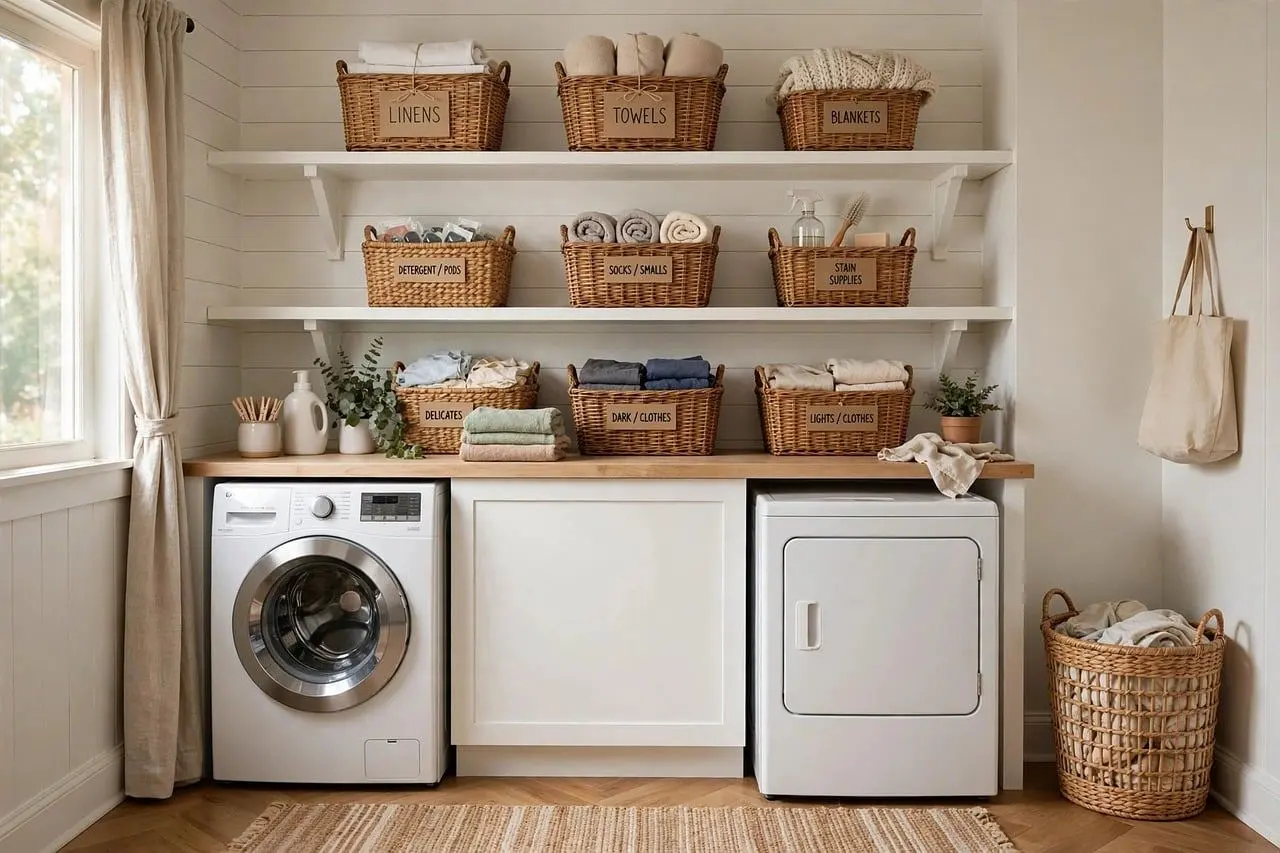
Once the sorting is finished, our guide on how to organize a closet covers what comes next. If laundry is the real culprit, these laundry room organization ideas may help, and easy-to-reach baskets stop dirty socks landing on the floor.
Home office
Clear the desktop completely, then decide what truly belongs there. Next, empty desk drawers and filing cabinets and get rid of unneeded paperwork, shredding any sensitive documents you aren’t keeping.
Consider which papers can live digitally. Bob Vila suggests scanning them and saving the files to a hard drive or cloud storage, if possible.
Keeping clutter from coming back
A tidy home is mostly routine. This Old House recommends daily habits such as tidying surfaces and returning items to their designated places, plus periodic sessions to review what you own.
- Label shelves and containers in cabinets and the pantry, so other household members can find and return things.
- Put a recurring review on the calendar rather than waiting for the mess to build.
- Adjust your storage as your needs change.
Cleaning order is another place the guides differ. This Old House suggests dusting and cleaning floors after each zone, whereas Bob Vila says to wait until the whole room is decluttered. Choose one method and stick with it.
Frequently asked questions
Where should you start?
Show answer
A small, low-stakes spot is easiest. A junk drawer is a common first target, and a list of rooms ranked by how much they bother you gives the order for everything else.
How long should each session last?
Show answer
There is no single right length. Organizers quoted by Homes & Gardens favor short, regular sessions over one exhausting weekend, because steady progress is easier to sustain.
What should you do with items you no longer want?
Show answer
Work down a ladder: someone you know may want an item, then a local charity, then recycling. According to This Old House, only things that cannot be reused or recycled should go in the bin.
Is it normal for a room to look worse halfway through?
Show answer
Yes. Emptying drawers and shelves to sort them spreads everything out, and an organizer quoted by Homes & Gardens warns that things look worse before they get better. Finish one zone completely before opening the next.