
Staring at a jammed closet every morning? Here’s how to organize a closet: empty it, clean it, keep only what you wear, then give every group a home and label it. Most beginners finish in a few hours.
This closet walkthrough is one part of our home organization series, so you can move on to other rooms afterwards.
| Item | Value |
|---|---|
| Working time | 2 to 3 hours |
| Skill level | Beginner |
| Estimated cost | $20 to $200 |
| Decluttering rule | 12-12-12: 12 items to discard, 12 to donate, 12 to return |
| Minimum walk-in closet width | 6 feet, with a 2-foot aisle and 2 feet of hanging space on either side |
These figures come from Bob Vila’s closet guide and This Old House’s closet organization guide. They can change, so check the sources before you rely on them.
What you need before you start
Bob Vila’s beginner-level guide estimates 2 to 3 hours of working time and a cost of $20 to $200, depending on the storage tools you choose. Homes & Gardens likewise says its tweaks can go in over a few hours on a weekend.
Gather the basics first, and buy storage only after the purge shows you what you need:
- A bed, table or rolling clothes rack to hold everything you take out.
- A microfiber cloth, plus a broom or vacuum.
- Shelf dividers, bins, hooks or hanging organizers for the rebuild.
- Labels for bins and shelves.
- Cedar blocks, if you want extra protection against pests.
Empty and clean the closet first
According to Bob Vila’s guide, the first step of any clean-out is emptying the space completely. Clear off your bed, set up a table or bring in a rolling clothes rack to hold the contents.
With the shelves bare, dust the shelves and rods with a microfiber cloth, then sweep or vacuum the floor. The professional organizer quoted in that guide also suggests cedar blocks to protect clothes from pests.
Sort and purge what you don’t wear
Start by making a pile for each category, as the organizer quoted by Bob Vila recommends. Then split each pile by season or by how often you wear the items.
- Tops
- Bottoms
- Dresses
- Shoes
- Accessories
Next comes an honest assessment of what you will actually wear. Bob Vila’s guide says to let go of anything that no longer fits or hasn’t been worn in several years, while Homes & Gardens offers a stricter rule of thumb: ditch anything you haven’t worn in the last year.
If you want a structure, Bob Vila’s guide describes the 12-12-12 rule: choose 12 items for each of three groups.
- Items to recycle or throw away.
- Items in good condition to donate.
- Items that belong in the closet and go back in.
Be firm but realistic. The Homes & Gardens organizer says there is no magic number of pieces to keep or discard, but you should be ruthless about things you don’t love.
If the purge stalls, our guide on how to declutter your home is a natural next read.
Build a system and put things back
Before you buy anything, check the rod height. Bob Vila’s guide says rods should be easy to reach and, if you use tiered systems, appropriately spaced.
Then add tools that fit your clothes. The guide’s organizer suggests shelf dividers, bins, hooks or hanging organizers to use every inch of space, and Homes & Gardens lists opaque bins among its favorite tricks.
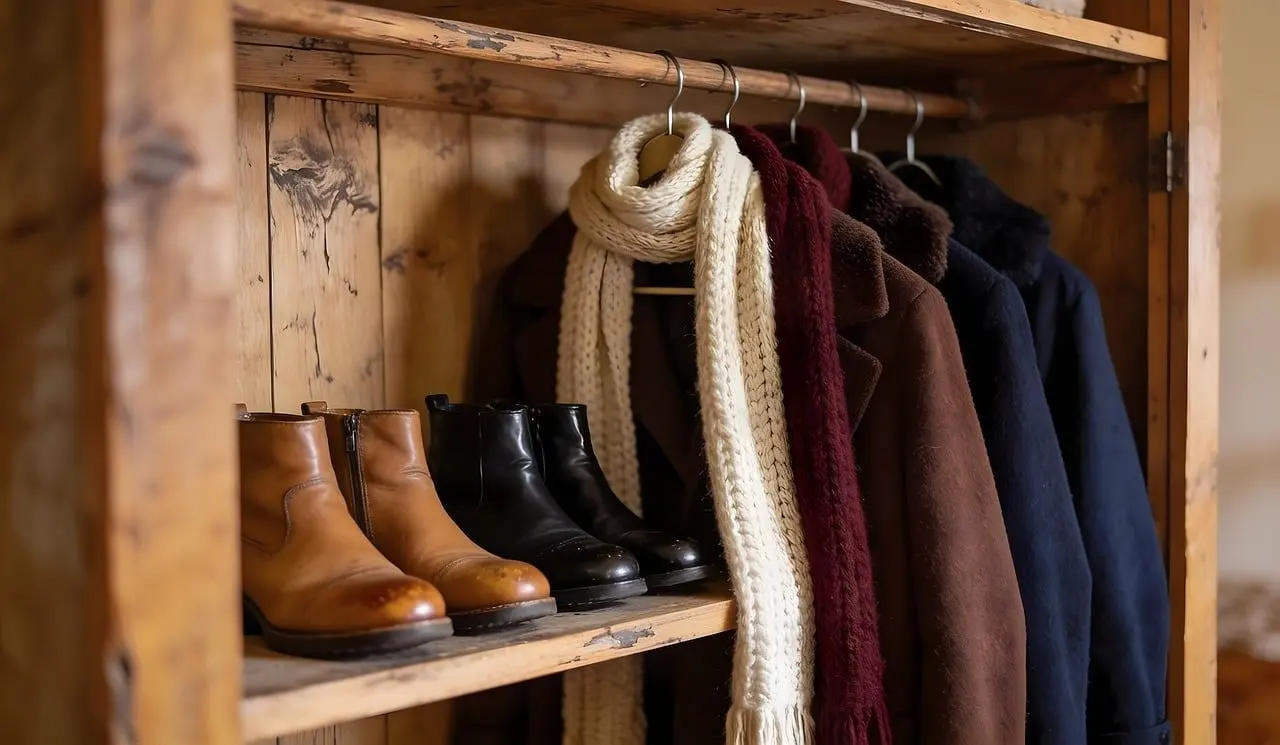
When you return items, follow the placement rule in Bob Vila’s guide: put what you use most within easy reach.
- Everyday items go at eye level.
- Special-occasion or seasonal pieces go on higher or lower shelves.
- Bulky sweaters, jeans, workout gear and shorts are folded onto a shelf instead of taking up hanging space.
For clothes on the rod, Homes & Gardens favors individual hangers, because the gaps between garments make them easier to see. It also advises choosing one hanger style for a cohesive look.
Label it and keep it tidy
The final step in Bob Vila’s guide is to label and maintain the closet, since after all that work the last thing you want is a quick slide back into a cluttered mess.
- Label each bin, shelf and drawer so every item has an obvious home.
- Put things back in their group after wearing or washing them.
- Keep out-of-season pieces folded in a clothing storage container.
- Check now and then for pieces you have stopped wearing, and pass them on.
The same group-and-label habit carries over to other rooms, and our walkthrough on how to organize kitchen cabinets applies it to the kitchen.
Walk-in and shared closets
For a walk-in closet, closet designer Mary Danowski tells This Old House that the space should be at least 6 feet wide. That allows a 2-foot aisle and 2 feet of hanging space on either side.
The same guide notes that a walk-in with enough room needs no seasonal clothing rotations. Without a system, though, it can still turn into a cluttered catch-all.
If you share the space, This Old House advises allocating room according to each partner’s needs. One pro organizer there also suggests a small drawer or cabinet that closes, where messes are allowed, which puts a limit on how much gets stored.
Frequently asked questions
How long does it take to organize a closet?
Show answer
A beginner can usually finish in a single session. Homes & Gardens describes its changes as something you can do with just a few hours on a weekend, per its closet tweaks article.
Should I hang or fold my clothes?
Show answer
It depends partly on your storage. The organizer at Homes & Gardens prefers hanging when you have the option, and suggests bins, drawer dividers and file folding to keep folded pieces neat and visible.
What should I do with clothes I no longer wear?
Show answer
Donate or sell them if they are in good condition. As an organizer quoted by Bob Vila explains, getting rid of items you don’t wear frees up space and makes it easier to see and access the things you love.
Do I need to buy organizers?
Show answer
Not necessarily. Bob Vila’s guide says that a little time, and perhaps a few new decluttering tools, is enough to make your storage work for you.
Do these steps work for a small closet?
Show answer
Yes. The same guide says its steps offer guidance whether you are working with a walk-in closet or a much smaller one, as noted by Bob Vila.