If your whole home feels like too much, home organization can start small. You keep a home tidy by sorting by category, giving everyday items a fixed place and running a short weekly reset.
| Item | Value |
|---|---|
| Short decluttering session | 15 to 30 minutes |
| Quick tidy: entryway tray, nightstand or bathroom counter | 10 minutes |
| Larger area: linen closet or home-office shelf | One hour |
| Expert golden rules for a put-together home | Seven rules |
| Sorting groups | Use now, put away, donate, recycle or discard, decide later |
These figures come from Public Storage’s Sep 9, 2026 post and the Homes & Gardens golden rules list of 21 June 2024. Figures can change, so check the sources before you rely on them.
Start with one small area, not the whole house
Feeling overwhelmed is common: Homes & Gardens says getting started can be just as difficult as maintaining a system afterwards.
The way in is a single small space. Public Storage’s Sep 9, 2026 guide says to choose one area, set a short time limit and create a designated place for the items you use every day.
Good first targets are small and visible, such as a kitchen counter, entryway, bathroom drawer or closet shelf. The result shows quickly, which makes it easier to carry on with bigger jobs.
Planning matters too. Sherri Papich, CEO of Organize Your Life, says decluttering without a plan often leads to scattered efforts and frustration, and she advises prioritizing spaces by function or emotional weight, as Homes & Gardens reported on 10 February 2025. Her suggestion is to begin with a small, manageable area to build momentum.
Build a priority list
A written list stops you trying to tackle every space at once. Public Storage outlines these steps:
- Walk through each room and identify areas that feel crowded or hard to use.
- Take a realistic photo of the problem areas for reference.
- List the spaces in order of priority.
- Choose one small area to organize first.
- Break larger projects into smaller tasks, such as one drawer, shelf or closet section.
Add future tasks to a phone note, calendar or paper list. That way you stay focused on the next task instead of every part of your home at once.
Use a timer for short sessions
A short timer makes clearing clutter feel more manageable. Public Storage suggests setting aside 15 to 30 minutes for one drawer, shelf, surface or category.
When the timer ends, you can stop, put away what you sorted and return to the next task another day. Scale the session length to the job:
| Time available | Task |
|---|---|
| 10 minutes | Tidy an entryway tray, nightstand or bathroom counter |
| 15 minutes | Organize one kitchen drawer or one shelf |
| 20 minutes | Sort a small clothing category, such as scarves or shoes |
| 30 minutes | Declutter one closet section, cabinet or storage bin |
| One hour | Organize a larger area, such as a linen closet or home-office shelf |
The task ideas come from Public Storage’s Sep 9, 2026 guide, so check it if you plan around the timings.
Sort first, then decide what stays
Professional organizers put sorting ahead of storage. Katie Clingman, owner of Settled in Soundly, says the first step of any project is to sort items into categories so clients can see everything they have in one place, as Homes & Gardens reported on 21 June 2024.
She adds that skipping this step often results in frustration and rework. Sorting also speeds up purging decisions, because you can see how much you own, and it lets you choose the right storage for what you keep.
A fuller walkthrough of letting things go is in this guide on how to declutter your home.
Choose a simple sorting system
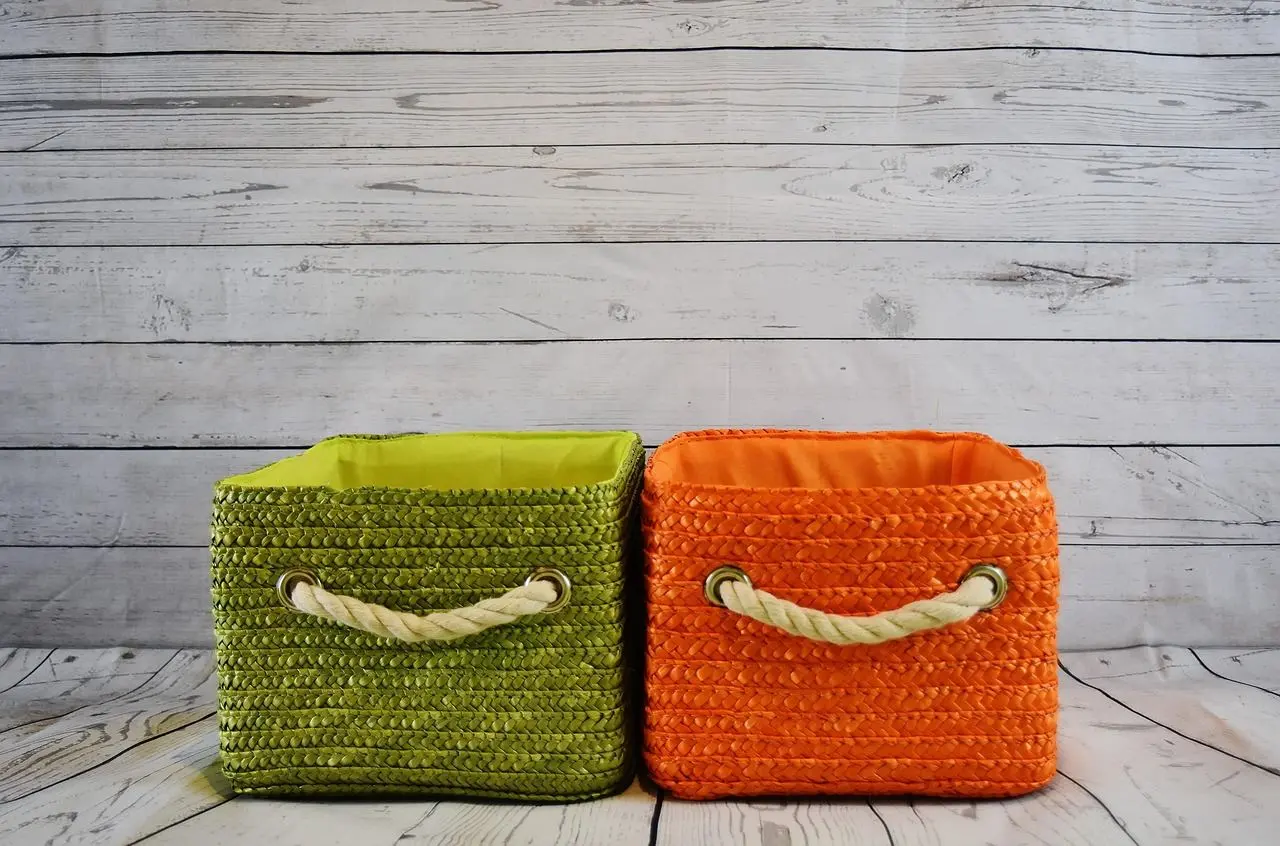
Public Storage suggests using boxes, bags or bins to separate what stays in the room from what goes elsewhere. A simple system can include these groups:
- Use now: items that support your everyday routine.
- Put away: items you plan to use during another season, event or project.
- Donate: items in usable condition that no longer fit your home or routine.
- Recycle or discard: worn, broken, empty or unusable items.
- Decide later: a small group of items that need more thought.
Keep the decide later group small and revisit it once the rest of the area is finished, so it does not turn into another long-term pile.
Another option is the Four Box Method. Eryn Donaldson, founder of The Model Home, describes it as sorting items into Keep, Donate, Sell and Trash, according to Homes & Gardens’ 10 February 2025 piece. Amy Bloomer, founder of Let Your Space Bloom, advises a designated bin or basket for donations so they are centralized and easy to retrieve.
Give every everyday item a fixed place
Daily items drift onto counters, chairs and floors when they have nowhere obvious to go. Public Storage says a home stays easier to organize when daily items have a consistent place, such as a tray for keys, hooks for bags, a hamper for laundry and bins for toys.
| Item | Designated storage idea |
|---|---|
| Keys and small accessories | Entryway tray, drawer or wall hook |
| Shoes | Low rack, basket or closet shelf |
| Bags and backpacks | Hooks, cubbies or entryway bench |
| Laundry | Hamper, basket or laundry-room shelf |
| Toys and hobby supplies | Labeled bins, baskets or shelving |
| Chargers and headphones | Charging tray, drawer or cord organizer |
| Seasonal décor | Labeled containers in an appropriate storage area |
These ideas are adapted from Public Storage, which also advises choosing a system simple enough for everyone in the household to use.
Labels, containers and like with like
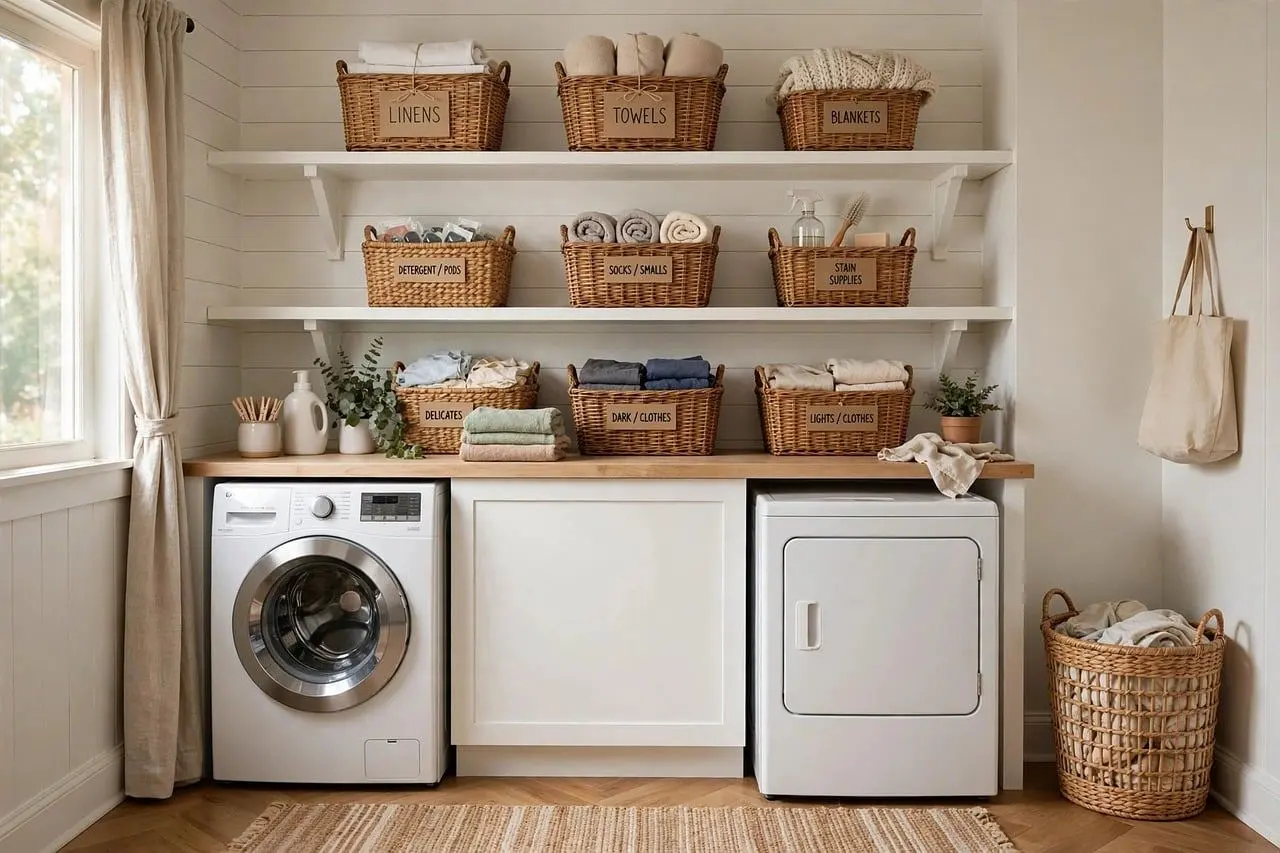
The Homes & Gardens golden rules include starting with basic labels and the right containers. Barbara Brock, a professional organizer and stager, says labeling can seem over the top but is a lifesaver for maintaining a space.
The same list names keeping like with like and not fighting your current routines. Read together, they suggest grouping similar things and building storage around habits you already have.
Where should you begin in each room?
Each room has its own pressure point. This table pairs common areas with a simple starting move.
| Area | Focus | Simple starting point |
|---|---|---|
| Kitchen counter | Mail, bags, appliances and loose items | Clear one section and return unrelated items to their designated places |
| Entryway | Shoes, jackets, bags and daily accessories | Add hooks, a tray, basket or shoe rack |
| Bathroom drawer | Toiletries, makeup and grooming tools | Sort items by category and use small dividers |
| Bedroom closet | Clothing, shoes and accessories | Keep current-season clothing within reach and put away extras |
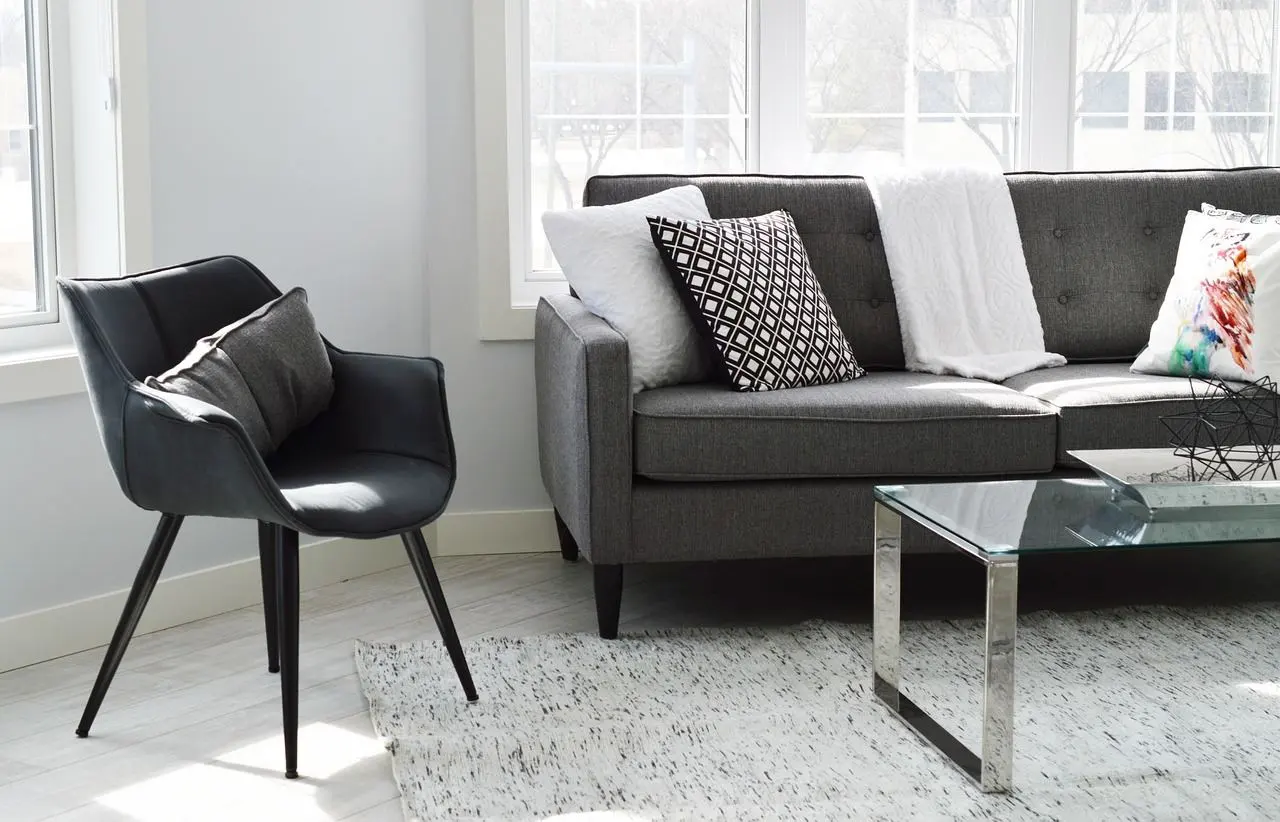
| Living room | Blankets, books, toys and décor | Use baskets or shelves for everyday items |
| Home office | Supplies, cords and work materials | Tidy the desktop and use trays or drawers for small supplies |
| Garage or storage area | Seasonal items and household overflow | Organize one shelf or category at a time |
The table follows Public Storage’s Sep 9, 2026 guide.
When you are ready to go deeper in one room, these guides cover the details:
- Hanging space and shelves are the subject of how to organize a closet.
- Cabinets around the stove and sink are covered in how to organize kitchen cabinets.
- Food storage gets its own treatment in pantry organization ideas.
- Drawers and counters in a small wet room are covered in how to organize a bathroom.
- Mail, bills and records are the focus of how to organize paperwork at home.
- Washing and folding areas are covered in laundry room organization ideas.
Mistakes professional organizers avoid
Homes & Gardens’ 10 February 2025 piece says professional organizers approach decluttering with precision, intention and a clear strategy. It adds that there are particular things they never do in their own homes.
The headings of that list name the common traps:
- Skipping systems
- Tackling sentimental items first
- Keeping items “just in case”
- Purging impulsively
- Following trends
- Leaving a space messy
- Getting distracted
The first is the easiest to fix: write a short plan, pick a sorting method and start with one small space, as described above.
How do you keep a home organized week to week?
A weekly reset stops small piles growing into large projects. Public Storage suggests choosing a day that fits your routine and spending a few minutes on the areas that collect the most items.
A typical weekly reset covers these jobs:
- Clear kitchen counters and dining surfaces.
- Put away bags, jackets, shoes and everyday accessories.
- Return laundry to drawers, closets or hampers.
- Tidy the home-office desk or work area.
- Review mail and current household reminders.
- Return toys, books and hobby supplies to their designated places.
- Add donation-ready items to a designated box or bag.
A consistent reset can also show you when a storage system needs to change.
Let your space set the limits
Tina Priestly, professional home organizer and owner of Ready, Set, Refresh, says clutter happens when you own more than your space can handle, as Homes & Gardens reported on 21 June 2024. Her fix is to cap each category, for example one shelf for sweaters.
She pairs that with a swap habit: when you buy something new, let go of something old. The same list ends with shopping purposefully.
Hidden spots can carry some overflow within those limits, and these under bed storage ideas show one place to look. Tight floor plans make limits matter more, which is where small space living helps, while interior design basics looks at how storage fits with layout and style.
Frequently asked questions
How long should a clearing session last?
Show answer
Keep it brief and match it to the job. Public Storage pairs ten minutes with an entryway tray and one hour with a linen closet, so pick the block that fits your day.
What is the first step in organizing a room?
Show answer
Pull everything out and sort it before you buy anything to hold it. Seeing the full amount in one place makes it clearer what to keep and what kind of storage it needs.
Do I need labels and containers straight away?
Show answer
Not on day one. Sort first, then add containers sized to what you kept; professional organizer Barbara Brock says labels help the space stay maintained over time.
How do I stop clutter coming back?
Show answer
Combine a short weekly tidy with a one-in, one-out habit, and give each category a limited amount of room. When a shelf is full, that is your cue to donate something before adding more.