Cabinets that swallow your pans and drawers that jam are fixable. Here is how to organize kitchen cabinets: empty them, edit what you own, then give every item a fixed home near where you use it.
This guide is part of our wider series on home organization.
| Item | Value |
|---|---|
| Source guide last updated | 7 July 2022 |
| Where to keep cooking tools | In a drawer right next to the stove |
| First step for any drawer | Take everything out and lay it on a surface |
| Pots and pans for a right-handed cook | To the right of the stove |
| Rule for important items | Give each one its own space |
These points come from Homes & Gardens, last updated 7 July 2022. Advice can change, so check the source before you rely on it.
Start by taking everything out
Professional organizer Lucy Mansey recommends that you empty the space completely before choosing any storage. Her reasoning, as quoted by Homes & Gardens, is that laying everything on a surface shows you exactly what you have and which storage systems might work.
Work on one cabinet or drawer at a time so the kitchen stays usable while you sort. A clear worktop or table makes a good sorting zone.
- Pick a single cabinet or drawer.
- Lift out every item and lay it where you can see it.
- Group like with like: baking tools, cutlery, cookware, containers.
- Note what you reach for daily and what you rarely touch.
Clear the clutter and clean while it is empty
The same guide suggests asking whether you have been making room for things you barely use. Holiday and special occasion items are the exception, and the rest can be discarded.
Non-food items that someone else could use can go to a charity. That frees up space, which matters most in a small kitchen.
An empty cabinet is also the easiest moment to wipe it out. If the same routine appeals for bedrooms, the guide on how to organize a closet applies it to clothes and accessories.
Why drawers and cabinets need different approaches
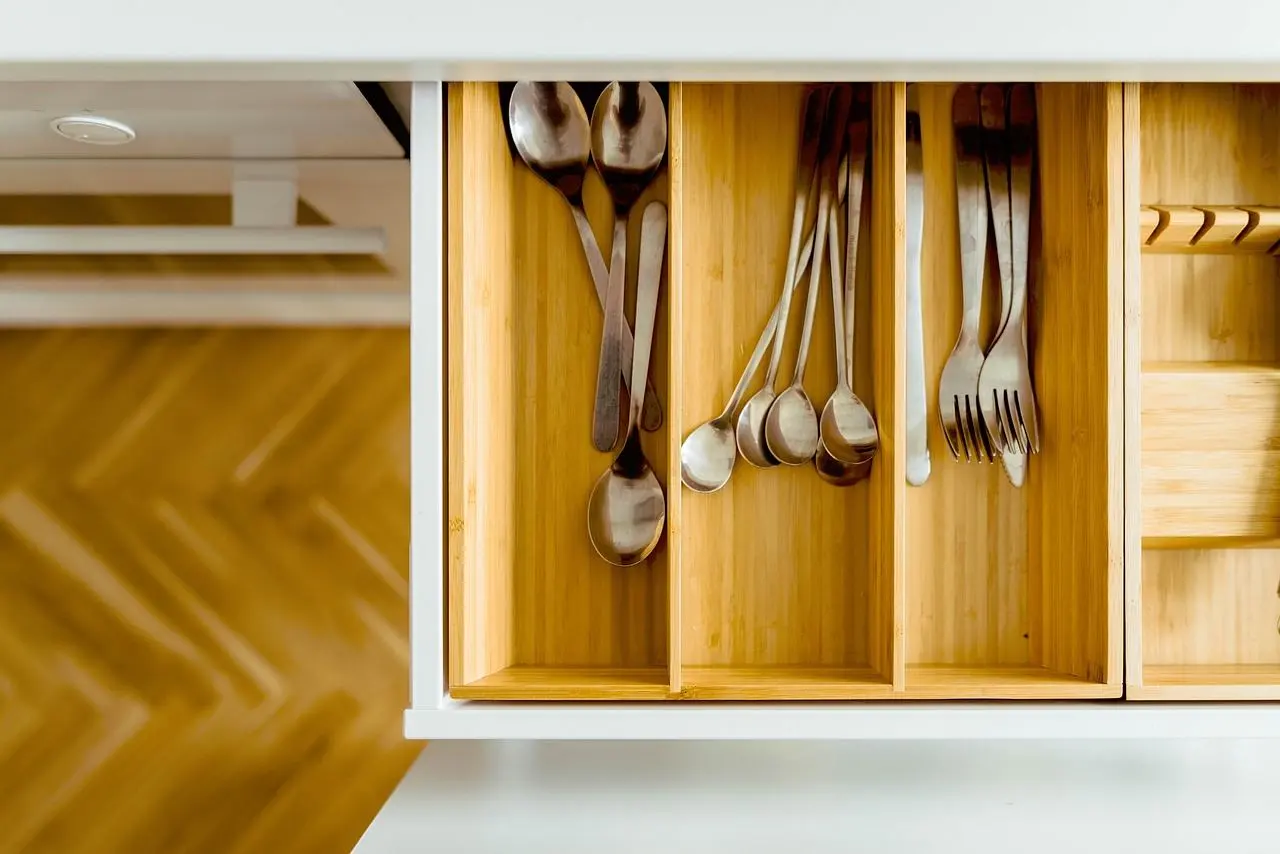
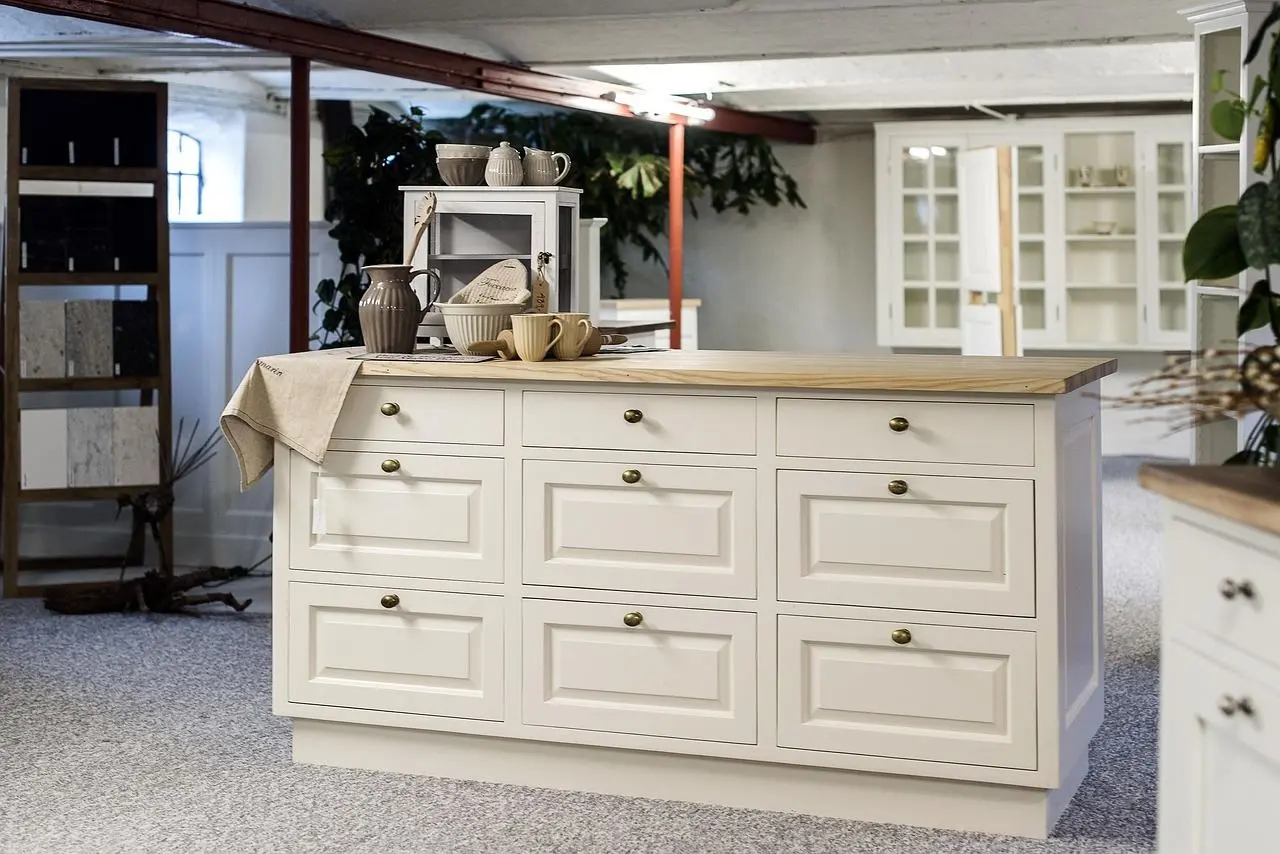
Homes & Gardens points out that cabinets and drawers need a different approach, even if you tackle them in the same weekend. Drawers show everything at a glance, while cabinets hide what sits at the back.
Designer George Forsyth is quoted as saying that many items store better in a drawer than in a cupboard. That is one reason professional organizers urge people not to overlook dividers.
Tom Howley, a kitchen design director, adds that drawers allow easy access to essentials rather than delving into the back of bulging cupboards. For you, that means moving anything you use often out of the deep cabinet and into a drawer where possible.
Where should each item live?
Home organizing expert Katherine Lawrence recommends keeping cooking tools very close to the stove. She says this can be a drawer right next to it.
Handedness matters here. If you are right-handed, use the drawer on the right of the stove, and if you are left-handed, use the one on the left.
The guide applies the same logic to everyday cookware: pots and pans go to the right of the stove for right-handed cooks and to the left for left-handed ones. Treat it as a starting layout and adjust it to how you really move around the room.
- Near the stove: spatulas, spoons, tongs and the pans you use daily.
- Near the sink: items you wash and put away most often.
- Higher or further back: occasional pieces that you use rarely.
Give your key items their own space
Kitchen designer Richard Davonport advises that you try to give each item its own space. His point is that very deep drawers can hide lots of clutter, but that does not necessarily make them more user-friendly.
His example is a non-stick frying pan buried under five other saucepans of various shapes and sizes, which is frustrating every time you need it. You can fix that with dividers, vertical racks or a dedicated slot for the pan you use most.
Once your cookware and tools have homes, food storage is the next job. Our pantry organization ideas cover that side of the kitchen.
Frequently asked questions
Where do I begin if the whole kitchen is a mess?
Show answer
Choose the one drawer or cabinet that annoys you most and clear only that. Finishing a small zone gives you a working method to repeat everywhere else.
Should pans live in drawers or cabinets?
Show answer
Either can work, but drawers let you see every pan at once. If a pan you use often is stuck under a stack, give it a separate spot.
Does being left-handed change the layout?
Show answer
Yes. Mirror the usual advice so that tools and pans sit on the side of the stove where your dominant hand falls naturally.
What should I do with items I no longer use?
Show answer
Donate usable non-food items to a charity and discard the rest. Seasonal pieces you do value can stay, as the guide allows for them.