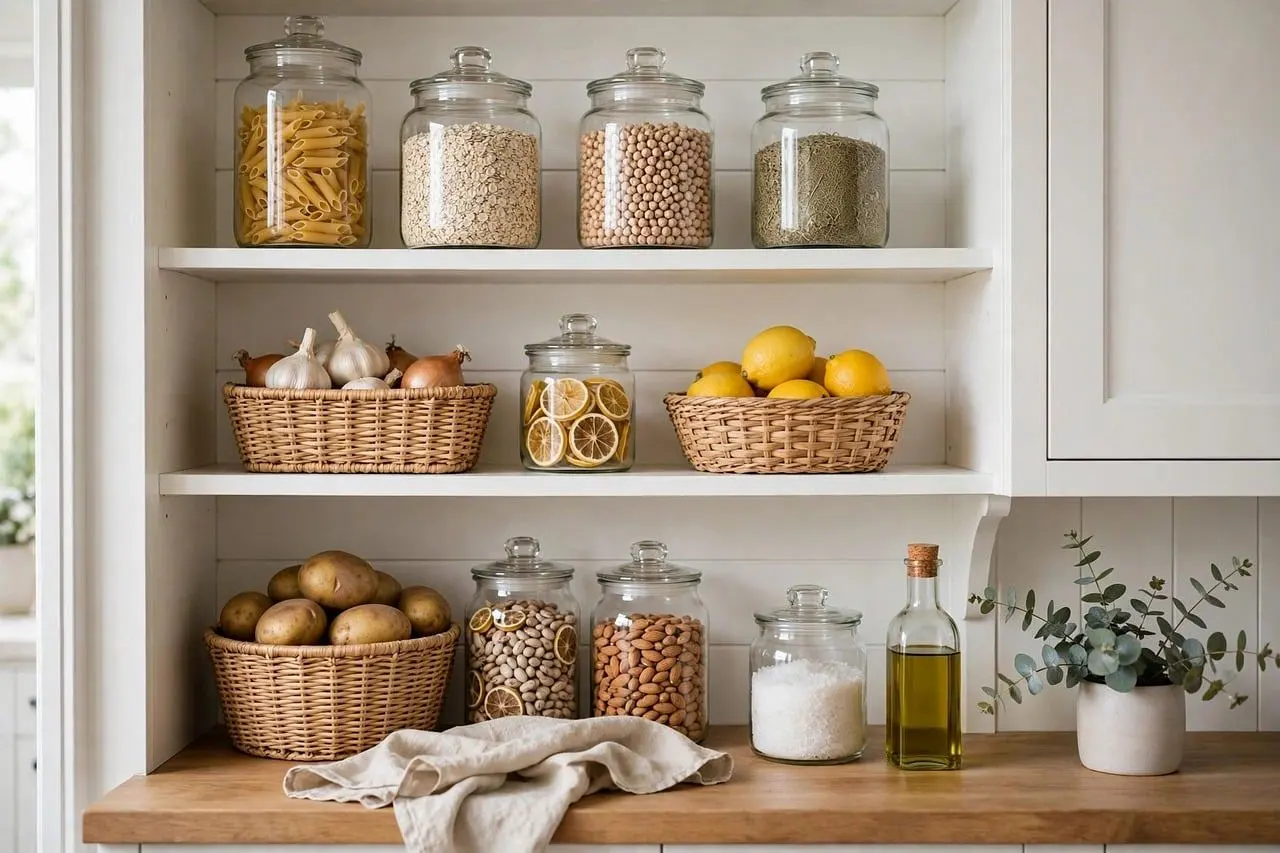
Cluttered shelves are fixable at any size. Whether you have a walk-in or a single cupboard, the best pantry organization ideas are simple: sort by category, keep daily items visible, and rotate older food to the front.
Pantry layouts are one small part of home organization, so the sorting habits below carry over to other rooms.
| Item | Value |
|---|---|
| Cool storage range for cupboard foods | 50°F to 70°F |
| Heat level that tends to lower food quality | above 100°F |
| Shelf life of unopened acidic canned foods, such as tomatoes and fruit | 12 to 18 months |
| Suggested shelf gap from the floor | 6 inches |
| Suggested shelf gap from outer building walls | 18 inches |
| Suggested stock check | once a month |
These figures come from the Academy of Nutrition and Dietetics and New Mexico State University’s food storage guide. Figures can change, so check the source before you rely on them.
Empty the pantry and decide what belongs
Start by taking everything out, because a crowded shelf is hard to judge while it is full. Wipe the shelves down and see what is left on the counter. UF/IFAS Extension points out that a pantry is for food and kitchen items, so craft supplies and party goods need another home.
- Empty each shelf and wipe it clean.
- Check seals, dates and the condition of every package.
- Move anything that is not food or a kitchen item to another room.
- Donate or hand on food you know you will not use before it goes stale.
Throw away cans that are cracked, bulging, leaking or that spurt liquid when opened, as the Academy of Nutrition and Dietetics advises. Illinois Extension adds that swollen cans can be a sign that Clostridium botulinum is growing inside.
A best-by date is about quality rather than safety. Illinois Extension describes the Best If Used By date as a recommendation for when flavor or quality is highest, so judge opened or doubtful items by seal and smell as well.
How do you group food so you can see it?
Sort what remains by category. Illinois Extension’s Eat.Move.Save. guide suggests storing similar items together, such as pastas and other grains, or dried and canned beans.
New Mexico State University lists a workable set of groups in its food storage guide:
- Protein: canned meats and seafood, nut butters, canned beans.
- Starch: rice, pasta and other grains.
- Liquids and sauces: broth, canned soup, canned tomatoes.
- Flavors: herbs, spices, soy and Worcestershire sauce.
- Staples: flour, sugar, baking soda and powder, salt, nuts, oils.
Next, think about what you reach for most. UF/IFAS Extension says those items should sit somewhere visible and easy to reach, whether that is canned goods, snacks or baking supplies.
Small cans and spice jars are the hardest to see. Illinois Extension recommends risers, and a homemade one works too: rest a piece of wood or cardboard on two cans of the same size to make a makeshift shelf.
Pantry organization ideas for small, reach-in and walk-in spaces
The same rules apply everywhere, but each size has its own pressure point.
- Single cupboard: use risers so nothing hides behind something else, and keep only the categories you cook with weekly.
- Reach-in pantry: put daily items at eye level and group the rest by category, one shelf per group where you can.
- Walk-in pantry: leave a clear walking path and keep the floor free, since stored food should stay off the ground.
For a larger pantry or storage room, New Mexico State University suggests shelving sit 6 inches from the floor and 18 inches from outer building walls. Food kept in wall cabinets can follow the same logic, and the guide on how to organize kitchen cabinets covers the rest of the room.
If you have wire shelving, UF/IFAS Extension suggests covering it with something stiff, such as non-fabric placemats or a cut-to-size rubber mat. That keeps shelves easy to wipe and helps balance small items.
Are storage containers worth buying?
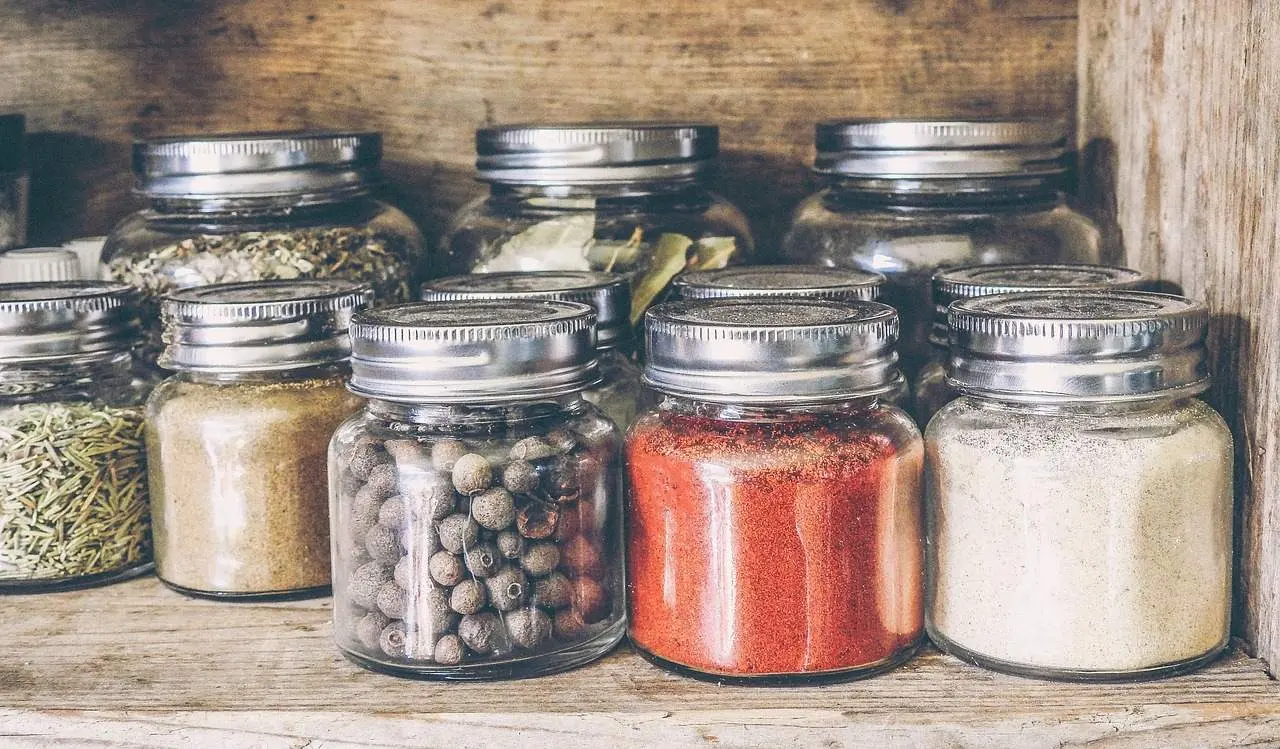
Only some of them. Opened food does need protection: Illinois Extension recommends a storage bag or a lidded container so pests cannot get into it.
The Academy of Nutrition and Dietetics adds that dry, airtight containers suit opened rice and pasta because they keep out insects and rodents and stop food absorbing odors and moisture.
Matching decanters are a different matter. UF/IFAS Extension notes that they can be costly and that you must keep refilling and washing them, so they make sense mainly for flour, sugar and coffee beans if you will keep up with them.
Whatever you use, label it. New Mexico State University recommends keeping a marker, labels or masking tape handy to note the contents and the date stored.
Where should pantry food live to stay in good shape?
Choose the coolest, darkest spot you have. The Academy of Nutrition and Dietetics says to keep cupboards and pantries clean, dry, dark and cool, ideally away from heat-producing appliances. It cites 50°F to 70°F as a cool range and says temperatures above 100°F tend to lower quality, especially in canned goods.
Heat matters for oils most of all. New Mexico State University advises the coolest cabinets, away from the oven, stove or refrigerator exhaust, because oils can turn rancid from heat. UF/IFAS Extension similarly says herbs and spices should stay away from light and heat to keep their freshness.
Unopened canned goods are forgiving if stored well. The Academy says highly acidic foods such as tomatoes and fruit may keep for as long as 12 to 18 months, while less acidic canned meats and vegetables may last for two to five years.
Keep food apart from chemicals too. Illinois Extension says not to store food and cleaning supplies in the same area, and the guide on how to organize a bathroom is one place to look for ideas on housing cleaners and toiletries elsewhere.
Make the system last
An organized pantry only stays that way with a light routine. The key habit is first in, first out: Illinois Extension recommends rotating pantry foods this way to maximize quality and reduce food waste.
- Put new purchases behind older ones, never in front.
- Do a stock check once a month, as New Mexico State University suggests, to confirm the oldest dates are at the front.
- Look through the shelves before you shop, which Illinois Extension says can stop you buying more than you need.
- Buy oils and nuts in smaller amounts if you use them slowly, since they can go rancid over time.
If you know something will expire before you can use it, passing it to a neighbor beats binning it.
Frequently asked questions
What is the first step when organizing a pantry?
Show answer
Clear the shelves completely and sort the contents into keep, donate and discard. Everything else, including grouping and labeling, is easier once you can see what you actually own.
Do I have to decant everything into matching jars?
Show answer
No. Matching jars look tidy but take ongoing effort, so many households do fine with the original packaging plus a lidded container for items that have been opened.
What temperature suits most shelf-stable food?
Show answer
Roughly 50°F to 70°F suits most dry and canned goods, and sustained heat above 100°F tends to hurt canned items in particular. The Academy of Nutrition and Dietetics also suggests siting storage away from the oven and other appliances that give off heat.
Is food unsafe once the date on the package passes?
Show answer
Not necessarily, because many printed dates describe peak quality instead of safety. Check the package itself and skip anything with a broken seal or an off smell, as Illinois Extension advises.