Cramped cupboards and a counter that never clears? The best small kitchen storage ideas start with editing what you own, then using the doors, drawers, walls and gaps you have overlooked.
This guide is part of a wider collection on small space living, covering every room of a compact home.
| Item | Value |
|---|---|
| Minimum width for a pull-out larder on runners | 12 inches |
| Fridge-to-wall-unit gap that suits a slim pull-out | Six inches |
| Usable depth of a toe-kick drawer | Roughly three to four inches |
| Standard upper cabinet height before stacking to the ceiling | 7ft |
| Worktop kept clear by a recessed knife block or spice shelf | 12-16 inches |
These figures come from the Homes & Gardens kitchen storage guide. They are rules of thumb and can change with cabinet makers and products, so check the source before you rely on them.
Edit and measure before you buy anything
One design guide puts it plainly: the best ideas for a small kitchen are ruthlessly edited. You start with what you actually use, eliminate what you don’t, and find the smartest home for what is left, as Homes & Gardens explains.
Decluttering is the cheapest way to gain space. Public Storage’s kitchen guide suggests starting with one drawer, shelf or cabinet and grouping similar items, which makes the problem pieces obvious. Typical candidates to put away or donate:
- Duplicate utensils and serving tools
- Single-purpose gadgets you rarely reach for
- Mismatched or damaged food-storage containers
- Small appliances that sit unused on the counter
Next, measure before shopping. The same guide advises you to record the width, depth and height of drawers, cabinets, pantry shelves and any open space where a cart or wall shelf might go. Keep the numbers in your phone so bins and dividers that do not fit never come home.
Make doors, drawers and narrow gaps work harder
Drawers are easier to use than deep cupboards, because you can see everything at once. If you are remodelling without changing the footprint, wider drawers instead of lower cabinets are one suggestion, and dividers keep utensils from jamming the runners.
The inside of cabinet doors is free storage. It suits spices, tea bags and other small items, and a basket on the back of a pantry door can stand in for a missing pantry, according to AOL’s round-up of small kitchen ideas. Under the sink, stacked bins or plastic drawers can hold sponges, dishwasher pods and rags in the same source.
Narrow gaps matter too. A designer quoted by Homes & Gardens likes slim pull-outs in the few inches beside a range or fridge. A six-inch gap suits a slim spice or tray column, while a proper larder pull-out on runners typically needs at least 12 inches of width.
Do not forget the floor. Toe-kick drawers under base cabinets give roughly three to four inches of usable depth, which the same guide says suits baking trays, chopping boards and placemats.
Go vertical with walls, hooks and ceiling-height cabinets
Vertical space is almost always underused in a smaller kitchen, according to Homes & Gardens. Look at the cupboard doors, the wall above the upper cabinets and any bare stretch near the stove, sink or fridge.
If your upper cabinets stop at the standard 7ft, stacking them to the ceiling can add the equivalent of a full extra cabinet’s worth of storage per run, says the same guide. Ask a qualified installer to do any fitting that affects walls or services.
For lighter-duty options, pick from this list:
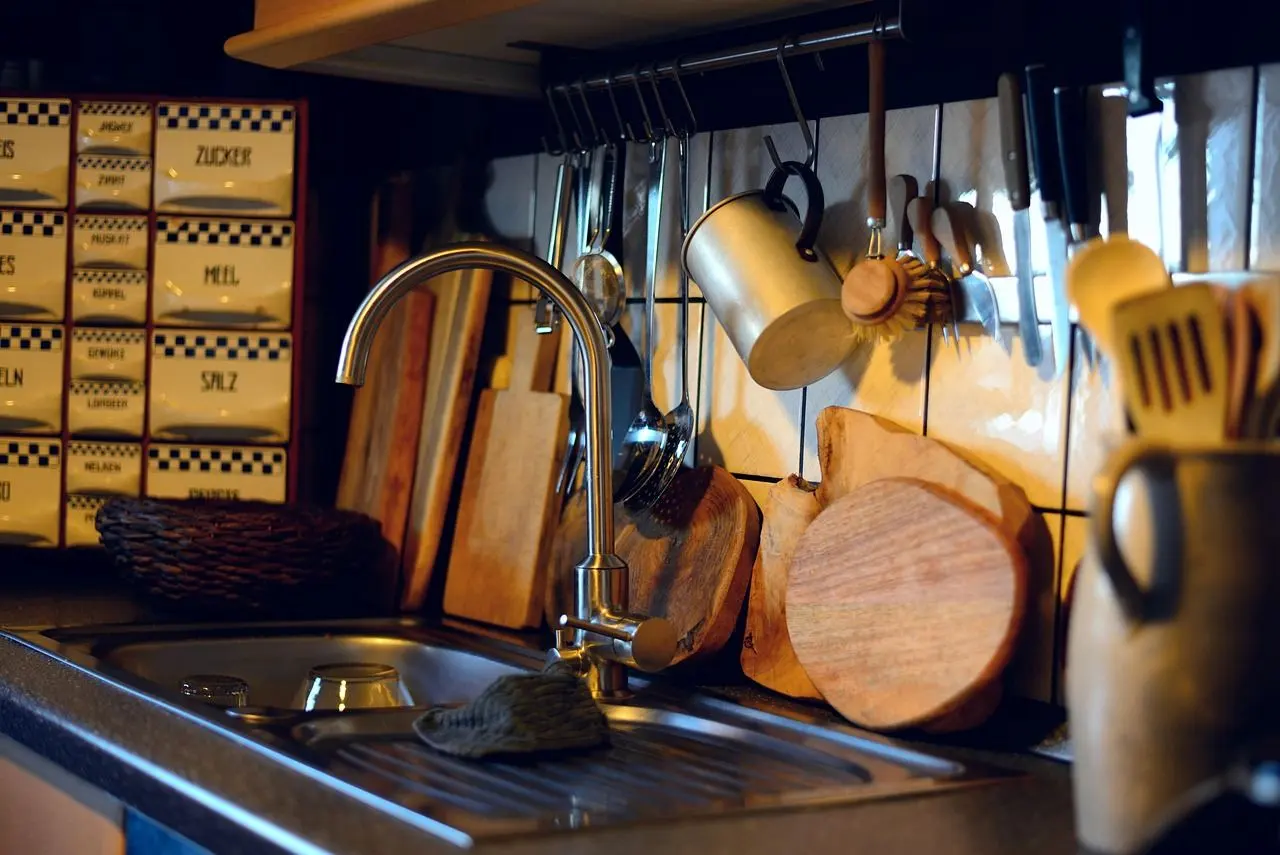
- A sturdy hanging bar with S-hooks for pots and pans, which frees up storage and counter space
- Wall-mounted hooks, shelves, magnetic strips or a pegboard for everyday tools, as Public Storage notes
- A narrow floating shelf for glasses, since open shelving frees up cabinet space
- A knife block or spice shelf recessed into the splashback, which keeps 12-16 inches of worktop clear according to Homes & Gardens
The same edit-then-measure logic carries over to other rooms, and our small bedroom ideas apply it to sleeping spaces.
How do you keep counters clear in a tight kitchen?
Put away what you rarely use. Public Storage recommends storing infrequently used appliances and keeping everyday utensils near the stove, so the worktop stays free for prep.
Decanting dry goods helps as well. Clear pantry containers cut down on the air-filled bags that crowd cabinets and let you see what you already have.
Beside the cooktop, narrow cabinets can hold spices, sheet pans and other cookware, as AOL’s list suggests. Moving gas pipes, electrical sockets or extraction is work for a licensed professional, not a weekend project.
A rolling cart is a flexible extra, listed among simple updates for a compact kitchen. Check it will not block walkways, and read about multifunctional furniture for small spaces if you want pieces that do two jobs.
A simple order of work
- Sort one drawer or shelf at a time and set aside the duplicates.
- Take measurements of every space you might fill.
- Fill doors, drawer interiors and slim gaps first.
- Move up to the walls and the space above the cabinets.
- Finish by clearing the counters of anything you do not use daily.
Frequently asked questions
Where should I begin if my kitchen has no pantry?
Show answer
Treat a few base or wall cabinets as your pantry. One tutorial in AOL’s roundup shows cabinets doing the work of a full pantry with the help of organizers.
Is open shelving sensible in a small kitchen?
Show answer
It can be, if you keep the display modest. Open shelves pull items off the counter, and matching dishware helps you keep only what you need, per the same AOL piece.
Do shelf risers really help?
Show answer
They add a second level in a tall cabinet, for example to separate mugs from plates. Measure shelf depth and height first, as Public Storage advises, so you can lift items out without scraping the shelf above.
Can I add storage around the stove myself?
Show answer
Hanging hooks or rearranging tools is fine for most households. Anything that touches gas, wiring or the structure of the room should go to a licensed professional.